




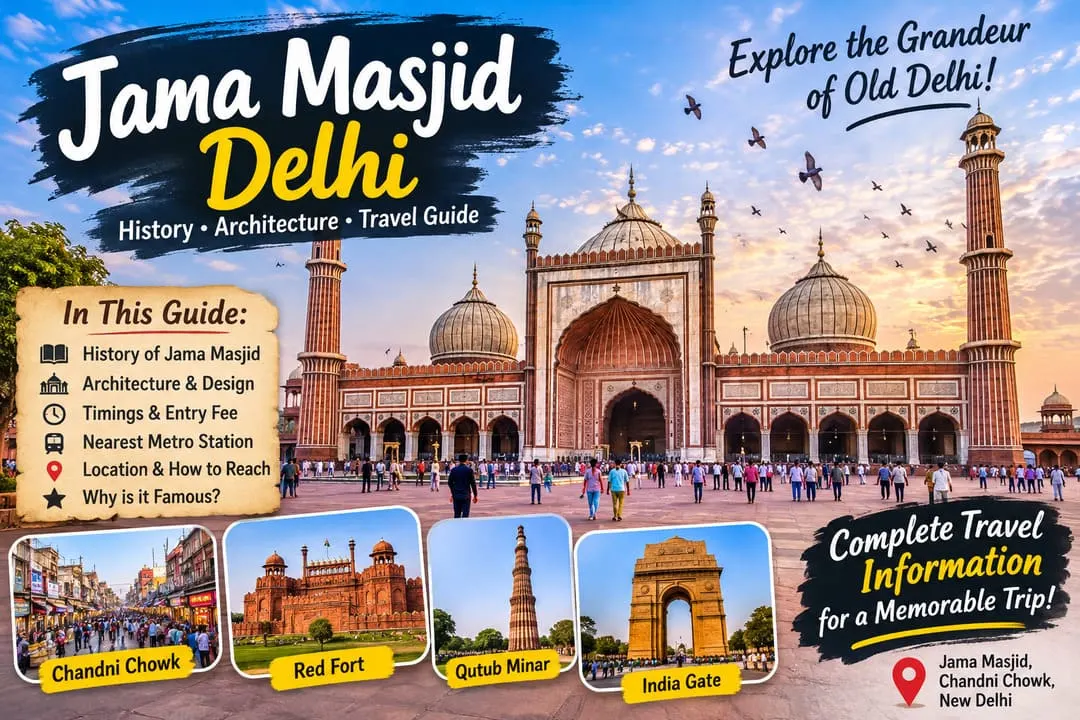
Located in the historic neighborhood of Old Delhi, Jama Masjid Delhi is one of the most remarkable examples of Mughal architecture in India. Known for its enormous courtyard, beautiful domes, tall minarets, and impressive red sandstone structure, the mosque is an important religious and historical landmark of the capital.
The mosque is officially known as Masjid-i-Jahan-Numa, a Persian name commonly translated as the mosque that reflects or commands a view of the world. It was commissioned by Mughal Emperor Shah Jahan and completed in 1656.
Jama Masjid is situated close to Chandni Chowk and the Red Fort, making it an important stop for anyone exploring the historical side of Delhi. Its surroundings offer a fascinating combination of Mughal-era architecture, traditional markets, narrow streets, and famous Old Delhi food destinations.
Whether you are interested in history, architecture, photography, or cultural experiences, visiting Jama Masjid provides an opportunity to understand a significant part of Delhi’s past.
Today, it remains an active place of worship as well as a popular attraction for domestic and international visitors.
Table of Contents
| 1. Introduction to Jama Masjid Delhi 2. Where Is Jama Masjid Located in Delhi? 3. History of Jama Masjid 4. Who Built Jama Masjid in Delhi? 5. Jama Masjid Architecture 6. Important Features of Jama Masjid 7. Jama Masjid Timings 8. Jama Masjid Entry Fee and Ticket Information 9. Jama Masjid Nearest Metro Station 10. How to Reach Jama Masjid 11. Best Time to Visit Jama Masjid 12. Things to See Inside Jama Masjid 13. How Much Time Is Required to Visit Jama Masjid? 14. Can Tourists Visit Jama Masjid? 15. Rules and Guidelines for Visitors 16. Places to Visit Near Jama Masjid 17. Famous Food to Try Near Jama Masjid 18. Travel Tips for Visiting Jama Masjid 19. Jama Masjid and Its Importance in Delhi Tourism 20. Frequently Asked Questions |
Where Is Jama Masjid Located in Delhi?
Jama Masjid is located in the heart of Old Delhi, near Chandni Chowk, in the central part of the city. It stands on a raised platform and is surrounded by busy traditional markets, local shops and historic neighbourhoods.
The monument is situated west of the Red Fort and is easily accessible through different parts of Old Delhi.
Jama Masjid Location Details
| Information | Details |
| Name | Jama Masjid |
| Original name | Masjid-i-Jahan-Numa |
| Location | Old Delhi, Delhi, India |
| Neighbourhood | Near Chandni Chowk |
| Nearest metro | Jama Masjid Metro Station |
| Metro line | Violet Line |
| Nearby landmark | Red Fort |
| City | Delhi |
| Country | India |
The area around Jama Masjid is particularly lively during the day. Visitors can explore nearby markets, discover traditional eateries and experience the cultural atmosphere of Old Delhi.
History of Jama Masjid
The Jama Masjid history is closely connected with the Mughal Empire and the development of Shahjahanabad, the historic city established by Emperor Shah Jahan.
During the 17th century, Shah Jahan decided to establish a new imperial capital in Delhi. This new city, known as Shahjahanabad, became an important centre of Mughal administration, culture, trade and architecture.
As part of this ambitious development, the emperor commissioned several magnificent structures, including the Red Fort and Jama Masjid.
Construction of Jama Masjid began in 1644 and continued for approximately 12 years. Thousands of workers, craftsmen and skilled artisans contributed to its construction. The mosque was completed in 1656 and became one of the most significant religious structures of the Mughal period.
Its elevated position and enormous courtyard made it a prominent landmark in the new imperial city. The mosque also became an important centre for Friday prayers and religious gatherings.
Over the centuries, Jama Masjid witnessed several important periods in Indian history, including the decline of Mughal power, the events of 1857 and the changes that took place during British rule.
Despite political changes and the transformation of Old Delhi, the mosque retained its religious and cultural importance.
Today, Jama Masjid continues to attract worshippers, historians, architecture enthusiasts and tourists from different parts of the world. It stands as a reminder of the architectural vision and cultural legacy of the Mughal era.
Who Built Jama Masjid in Delhi?
Jama Masjid in Delhi was commissioned by Mughal Emperor Shah Jahan, the same emperor who built the Taj Mahal in Agra and the Red Fort in Delhi.
Construction started in 1644 and was completed in 1656. The mosque was developed as the principal congregational mosque of Shahjahanabad, the Mughal capital.
Shah Jahan was known for his interest in architecture and monumental construction. His reign witnessed the development of several iconic buildings that combined Persian, Islamic and Indian architectural influences.
Jama Masjid was among his most important architectural contributions to Delhi. Its grand scale, decorative marble work, red sandstone walls and impressive courtyard reflect the artistic achievements of Mughal architecture.
The mosque’s construction is generally associated with a cost of approximately 10 lakh rupees at that time, according to historical accounts.
Jama Masjid Architecture
The Jama Masjid architecture is a beautiful example of Mughal design, combining symmetry, impressive proportions and detailed decorative craftsmanship.
Built primarily with red sandstone and white marble, the mosque creates a striking visual appearance. Its elevated location, three grand entrance gates, large prayer hall and tall minarets make it one of the most recognisable historical structures in Old Delhi.
The architectural design reflects the Mughal preference for balanced layouts, geometric patterns and large open spaces.
One of the most interesting aspects of the mosque is the way its architecture combines grandeur with functionality. While the enormous courtyard accommodates large congregations, the prayer hall provides a dedicated space for worship.
Main Architectural Features of Jama Masjid
1. Three Grand Entrance Gates
Jama Masjid has three impressive entrance gates located on its eastern, northern and southern sides. These entrances connect the mosque with the surrounding streets of Old Delhi.
The eastern gate is traditionally considered the most prominent entrance and is associated with the emperor’s access to the mosque.
2. Two Tall Minarets
One of the most striking features of Jama Masjid is its two minarets, each approximately 40 metres high.
They are constructed using alternating vertical sections of red sandstone and white marble. Their height and architectural detailing add to the impressive appearance of the mosque.
3. Three Marble Domes
The mosque features three large white marble domes decorated with distinctive black marble stripes.
These domes sit above the main prayer hall and create a beautiful contrast against the red sandstone structure.
4. Spacious Courtyard
The central courtyard is one of the most impressive parts of Jama Masjid. It is a large open space that can accommodate approximately 25,000 worshippers at a time.
An ablution tank, known as a hauz, is located in the courtyard. It is used for ritual washing before prayers.
5. Decorative Arches and Marble Details
The prayer hall contains beautifully designed arches, marble surfaces and decorative details.
The combination of red sandstone, white marble and geometric patterns demonstrates the craftsmanship of Mughal-era artisans.
Architectural Highlights at a Glance
| Feature | Description |
| Architectural style | Mughal architecture |
| Main materials | Red sandstone and white marble |
| Minarets | Two |
| Minaret height | Approximately 40 metres |
| Domes | Three |
| Entrance gates | Three main gates |
| Courtyard capacity | Approximately 25,000 people |
| Construction period | 1644–1656 |
Jama Masjid Timings
If you are planning a visit, checking the Jama Masjid timings is important because the mosque remains an active place of worship.
According to Delhi Tourism, tourist visiting hours differ for Indian and foreign visitors. Prayer periods may also affect access.
| Visitor Category | Visiting Hours |
| Indian tourists | 11:00 AM to sunset |
| Foreign tourists | 8:00 AM to sunset |
| Devotees | According to prayer schedules |
| Weekly opening | All days |
Important: Visitors are not allowed to explore the mosque as tourists during certain prayer periods. After sunset, access is restricted to devotees for the evening prayer. Timings can change during Ramadan, festivals and special religious occasions.
It is best to confirm the latest timings locally before travelling.
Jama Masjid Entry Fee and Ticket Information
One of the common questions among visitors is whether they need to purchase a ticket to enter Jama Masjid.
According to the Delhi Tourism listing, entry is free for Indian tourists, while foreign tourists are charged an entry fee.
| Visitor Category | Entry Fee |
| Indian tourists | Free |
| Foreign tourists | ₹400 |
| Photography | Free, subject to current rules |
Please note that charges and visitor rules may change. Confirm the applicable fee at the entrance before your visit.
Visitors should also be aware that separate arrangements may apply for footwear storage, clothing or access to restricted areas.
Jama Masjid Nearest Metro Station
The easiest way to reach Jama Masjid is by Delhi Metro. The Jama Masjid nearest metro station is Jama Masjid Metro Station on the Violet Line.
The station is approximately 400 metres from the mosque, depending on the exit and walking route.
| Metro Station | Metro Line | Approximate Distance |
| Jama Masjid | Violet Line | 400 m |
| Chawri Bazar | Yellow Line | 700 m |
| Lal Qila | Violet Line | 800 m |
| Chandni Chowk | Yellow Line | 900 m |
Distances are approximate and can vary depending on the route.
Best option: Get off at Jama Masjid Metro Station and use the exit towards Jama Masjid. Chawri Bazar is another convenient option for visitors travelling on the Yellow Line.
How to Reach Jama Masjid
Reaching Jama Masjid is relatively easy because it is well connected to different parts of Delhi.
By Metro: Take the Violet Line and get off at Jama Masjid Metro Station. From there, walk towards the mosque entrance.
By Bus: Delhi Transport Corporation buses connect Old Delhi with several residential and commercial areas. You can get down near the Jama Masjid or nearby Red Fort area.
By Auto-Rickshaw or E-Rickshaw: Auto-rickshaws and e-rickshaws are commonly available around Chandni Chowk, Red Fort and other parts of Old Delhi.
By Car: You can reach the surrounding area by road, but traffic congestion and limited parking can make driving less convenient. Walking or using the metro is generally a better option.
Best Time to Visit Jama Masjid
The best time to visit Jama Masjid is generally during the cooler months, from October to March, when Delhi experiences more comfortable weather for sightseeing.
During these months, visitors can explore the mosque and nearby historical attractions without dealing with the intense summer heat.
Early daytime visits are also a good choice for enjoying the architecture and exploring the surrounding streets.
Season-wise travel suggestions:
- October to March: Comfortable weather for exploring Old Delhi and its historical monuments.
- April to June: Temperatures can become extremely high, so plan your visit during cooler hours.
- July to September: Monsoon weather can bring humidity and occasional rainfall.
If you want to experience the cultural atmosphere of the area, visiting during Ramadan can be particularly interesting. The streets around Jama Masjid become lively with food stalls and evening activity. However, expect larger crowds and follow local religious guidelines.
Things to See Inside Jama Masjid
A visit to Jama Masjid is not limited to looking at its exterior. The mosque has several architectural and historical features worth exploring.
Explore the Grand Courtyard: Spend some time appreciating the enormous open courtyard and its symmetrical layout.
Admire the Main Prayer Hall: Observe the arches, marble details and architectural elements that reflect Mughal craftsmanship.
Look at the Three Domes: The white marble domes with black decorative stripes are among the mosque’s most recognisable features.
Observe the Minarets: The two tall minarets are an important part of its architectural identity.
Experience the Spiritual Atmosphere: Jama Masjid is an active religious place, so visitors can observe its peaceful environment while respecting those who come to pray.
Access to certain sections, including minaret visits, may be restricted or subject to separate charges and current rules. Always check locally before planning these activities.
How Much Time Is Required to Visit Jama Masjid?
Most visitors can explore the main areas of Jama Masjid in approximately 45 minutes to 1.5 hours.
The time required depends on your interest in architecture, photography and the amount of time you spend exploring the courtyard.
| Type of Visit | Approximate Time |
| Quick visit | 30–45 minutes |
| Regular sightseeing | 45–90 minutes |
| Detailed exploration | 1.5–2 hours |
If you also want to explore Chandni Chowk, nearby markets and the Red Fort, consider keeping at least half a day for your Old Delhi trip.
Can Tourists Visit Jama Masjid?
Yes, Jama Masjid is open to tourists, including Indian and international visitors, subject to its visiting hours and religious guidelines.
Visitors can explore the mosque’s courtyard and admire its Mughal architecture. However, it is important to remember that Jama Masjid is not simply a historical monument; it is also an active place of worship.
Tourists should dress modestly, remove their footwear before entering designated areas and avoid disturbing people during prayers.
Foreign visitors may need to pay the applicable entry fee, while Indian tourist entry is listed as free by Delhi Tourism.
Photography rules should be checked at the entrance, particularly for restricted areas and prayer spaces.
Rules and Guidelines for Visitors
Before visiting Jama Masjid, keep these simple guidelines in mind:
- Wear modest and respectful clothing.
- Remove your footwear before entering the prayer area.
- Respect prayer times and avoid disturbing worshippers.
- Maintain silence and behave respectfully inside the mosque.
- Follow instructions given by mosque staff.
- Ask before photographing people or restricted areas.
- Keep the premises clean and avoid littering.
- Check the current entry rules before visiting.
These guidelines help visitors enjoy the historical and architectural beauty of Jama Masjid while respecting its religious importance.
Places to Visit Near Jama Masjid
One of the biggest advantages of visiting Jama Masjid is its location. Several famous historical monuments, religious sites and traditional markets are situated nearby.
You can easily combine your visit to Jama Masjid with other attractions and experience the history, food and culture of Old Delhi.
1. Red Fort
Located close to Jama Masjid, the Red Fort is one of India’s most important historical monuments.
Built by Emperor Shah Jahan in the 17th century, the fort served as the main residence of Mughal emperors for many years. Its impressive red sandstone walls, royal buildings, gardens and museums offer visitors a glimpse into the history of the Mughal Empire.
You can explore both Jama Masjid and the Red Fort on the same day because of their close proximity.
Distance: Approximately 1 km.
2. Chandni Chowk
Chandni Chowk is one of the oldest and most famous markets in Delhi. Established during Shah Jahan’s reign, this historic marketplace is known for its narrow lanes, traditional shops, textiles, jewellery, spices and street food.
After exploring Jama Masjid, you can walk towards Chandni Chowk to experience the traditional lifestyle and shopping culture of Old Delhi.
Distance: Approximately 1–1.5 km, depending on the route.
3. Gurudwara Sis Ganj Sahib
Gurudwara Sis Ganj Sahib is an important Sikh religious site located in Chandni Chowk. It commemorates the martyrdom of Guru Tegh Bahadur Ji.
The gurudwara is known for its peaceful atmosphere, beautiful architecture and religious significance. Visitors can experience Sikh traditions and learn about an important chapter in Indian history.
Distance: Approximately 1.5 km.
4. Fatehpuri Masjid
Fatehpuri Masjid is another historic mosque in Old Delhi. It was built by Fatehpuri Begum, one of Emperor Shah Jahan’s wives, during the 17th century.
Located at the western end of Chandni Chowk, this mosque is an interesting destination for people who want to explore more examples of Mughal architecture.
Distance: Approximately 2 km.
5. Raj Ghat
Raj Ghat is the memorial dedicated to Mahatma Gandhi. Located near the banks of the Yamuna River, it is a peaceful place surrounded by green gardens.
The memorial features a simple black marble platform marking the site of Gandhi’s cremation. It is an important destination for visitors interested in India’s freedom movement and modern history.
Distance: Approximately 3–4 km.
Other Historical Places to Explore in Delhi
If you have more time, you can also explore:
- India Gate – A famous war memorial and one of Delhi’s best-known landmarks.
- Humayun’s Tomb – A magnificent Mughal-era tomb and UNESCO World Heritage Site.
- Qutub Minar – A remarkable medieval monument known for its towering minaret.
- Lotus Temple – An iconic modern architectural landmark.
- Akshardham Temple – A large cultural and spiritual complex known for its detailed architecture.
These destinations are spread across Delhi, so you should plan a separate sightseeing route rather than trying to cover all of them during a short Old Delhi visit.
Famous Food to Try Near Jama Masjid
A trip to Jama Masjid feels incomplete without exploring the food culture of Old Delhi. The surrounding streets are famous for traditional Mughlai dishes, kebabs, biryani and delicious desserts.
Some popular dishes worth trying include:
1. Mutton Nihari: A slow-cooked meat preparation traditionally served with naan or other Indian breads.
2. Seekh Kebabs: Spiced minced meat cooked on skewers and served with chutney and onions.
3. Chicken Korma: A rich Mughlai preparation made with aromatic spices and a creamy gravy.
4. Biryani: A popular rice dish prepared with aromatic spices and meat or vegetables.
5. Shahi Tukda: A traditional dessert made with bread, milk-based preparation and dry fruits.
6. Jalebi: A sweet, crispy and syrup-soaked Indian dessert commonly enjoyed in Old Delhi.
Food lovers can explore the streets around Jama Masjid and Chandni Chowk to discover traditional eateries and local flavours. Check food hygiene and prices before ordering.
Travel Tips for Visiting Jama Masjid
A little planning can make your visit to Jama Masjid more comfortable and enjoyable.
Here are some useful travel tips:
- Visit during the cooler months if possible.
- Check the mosque’s visiting hours before leaving.
- Prefer the metro to avoid Old Delhi traffic.
- Carry some cash for small purchases and local transport.
- Wear comfortable footwear because you will need to walk around the area.
- Follow the mosque’s clothing and footwear guidelines.
- Avoid visiting during peak prayer periods if your main purpose is sightseeing.
- Keep your belongings secure in crowded market areas.
- Carry drinking water, especially during the summer months.
- Leave enough time to explore Chandni Chowk and the Red Fort.
If you are visiting Delhi for the first time, combining Jama Masjid with nearby attractions is a convenient way to explore the city’s historic neighbourhood.
Jama Masjid and Its Importance in Delhi Tourism
Jama Masjid plays an important role in Delhi’s cultural, historical and religious identity. It represents the architectural achievements of the Mughal period and remains one of the most recognisable landmarks of Old Delhi.
The mosque also helps visitors understand the historical development of Shahjahanabad and its connection with other Mughal monuments, especially the Red Fort.
For tourists, Jama Masjid offers more than an opportunity to admire an old building. It provides a chance to experience the traditional atmosphere of Old Delhi, explore historic marketplaces and understand the city’s diverse cultural heritage.
If you are planning a wider sightseeing trip, you can include Jama Masjid in your itinerary alongside other famous places to visit in Delhi.
Delhi is also an excellent starting point for exploring North India. Travellers can continue their journey towards Agra, Jaipur, Rishikesh and other popular destinations.
Conclusion
Jama Masjid is one of the most fascinating historical landmarks in Delhi. From its magnificent Mughal architecture and spacious courtyard to its religious importance and connection with Emperor Shah Jahan, the mosque offers a memorable experience for anyone interested in India’s history.
Its location in Old Delhi also makes it easy to explore other famous attractions, including the Red Fort, Chandni Chowk and traditional food markets.
Whether you are a history enthusiast, architecture lover or first-time visitor to the capital, Jama Masjid deserves a place on your Delhi sightseeing itinerary.
If you are planning a bigger holiday, explore more destinations through our Places to Visit in India travel guide and discover the historical, cultural and natural attractions that make North India such an interesting region to explore.
FAQs
1. Why is Jama Masjid famous?
Jama Masjid is famous for its impressive Mughal architecture, enormous courtyard, three marble domes and two tall minarets. Built by Emperor Shah Jahan, it is one of the largest and most historically significant mosques in India.
2. What is the history of Jama Masjid?
Jama Masjid was commissioned by Mughal Emperor Shah Jahan in 1644 and completed in 1656. It was constructed as the principal congregational mosque of Shahjahanabad, the Mughal capital established in Old Delhi.
3. Who built Jama Masjid in Delhi?
Jama Masjid was built under the commission of Mughal Emperor Shah Jahan. Construction began in 1644 and was completed in 1656.
4. What is the Jama Masjid entry fee?
According to Delhi Tourism, entry is free for Indian tourists, while foreign tourists are charged ₹400. Visitors should confirm current charges at the entrance because fees and rules may change.
5. What are the Jama Masjid timings?
Delhi Tourism lists Indian tourist hours as 11:00 AM until sunset and foreign tourist hours as 8:00 AM until sunset. Access may be restricted during prayer times.
6. What is the nearest metro to Jama Masjid?
Jama Masjid Metro Station on the Violet Line is the nearest metro station, approximately 400 metres from the mosque. Chawri Bazar on the Yellow Line is another nearby option.
7. Can tourists visit Jama Masjid?
Yes, both Indian and international tourists can visit Jama Masjid during permitted visiting hours. Visitors must follow the mosque’s dress code, footwear arrangements and religious guidelines.
8. How much time is required to visit Jama Masjid?
Most visitors need around 45 minutes to 1.5 hours to explore the mosque. If you also plan to visit Chandni Chowk and the Red Fort, keep at least half a day for sightseeing.
9. Is photography allowed inside Jama Masjid?
Delhi Tourism currently lists photography as free. However, visitors should follow local photography restrictions and respect worshippers and restricted areas.
10. What is the original name of Jama Masjid?
Its original name is Masjid-i-Jahan-Numa, a Persian name commonly translated as the mosque that reflects or commands a view of the world.
11. How many domes and minarets are there in Jama Masjid?
Jama Masjid features three large marble domes and two approximately 40-metre-high minarets.
12. Which places can I visit near Jama Masjid?
Popular attractions near Jama Masjid include the Red Fort, Chandni Chowk, Gurudwara Sis Ganj Sahib, Fatehpuri Masjid and Raj Ghat.