



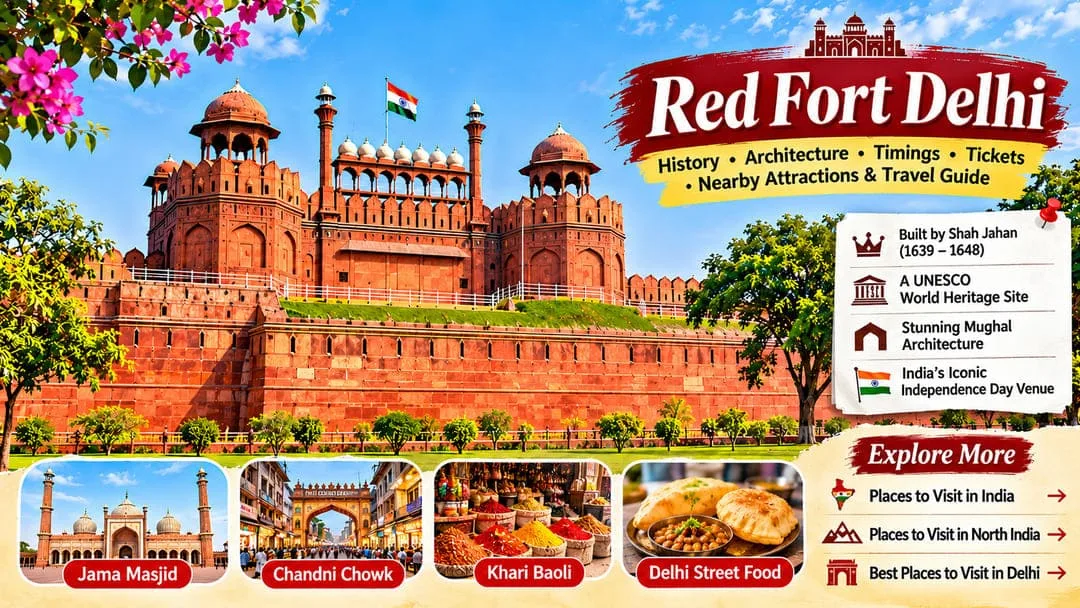
Delhi is a city where history meets modern life, and few monuments capture this combination as beautifully as the Red Fort. Standing proudly in the heart of Old Delhi, this magnificent red sandstone fortress tells the story of Mughal emperors, royal traditions, architectural brilliance and India’s freedom struggle.
Known locally as Lal Qila or Lal Quila, the Red Fort is one of the most famous historical places in Delhi. Its massive walls, beautiful Mughal buildings, royal halls and historic gateways make it an unforgettable destination for history lovers, architecture enthusiasts, families and travellers exploring India’s capital.
If you are planning to visit Red Fort Delhi, this complete guide covers everything you need to know, including Red Fort history, architecture, Lal Qila opening and closing time, ticket booking, entry fees, location, nearby attractions, Old Delhi markets, famous food and travel tips.
Table of Contents
| 1. Introduction to Red Fort Delhi 2. Red Fort History 3. Which Mughal Emperor Built the Red Fort in Delhi? 4. Mughal Architecture and Design of Red Fort 5. Famous Attractions Inside Red Fort 6. Red Fort Delhi Timings 7. Red Fort Delhi Ticket Price 8. Lal Qila Ticket Booking 9. Red Fort Location and How to Reach 10. Places to Visit Near Red Fort 11. Markets Near Red Fort 12. Famous Food Near Red Fort 13. Best Time to Visit Red Fort Delhi 14. Red Fort Delhi Travel Tips 15. One-Day Old Delhi Travel Itinerary 16. Frequently Asked Questions |
Introduction to Red Fort Delhi
Red Fort Delhi is one of the most iconic landmarks in India’s capital. Built during the Mughal period, the fort served as the principal palace of the Mughal emperors and became an important centre of political, cultural and administrative activities.
The monument is recognised for its impressive red sandstone walls, royal pavilions, historic gates, gardens and decorative architecture. It is part of the Red Fort Complex, which includes the adjoining Salimgarh Fort.
The Red Fort was inscribed on the UNESCO World Heritage List in 2007 because of its outstanding architectural and historical significance.
Today, the monument represents both India’s Mughal heritage and its journey towards independence. Every year on 15 August, the Prime Minister of India addresses the nation from the Red Fort during Independence Day celebrations.
Red Fort Delhi at a Glance
| Information | Details |
| Monument Name | Red Fort |
| Local Name | Lal Qila / Lal Quila |
| Location | Netaji Subhash Marg, Old Delhi |
| Built By | Mughal Emperor Shah Jahan |
| Construction Period | 1639–1648 |
| Architectural Style | Mughal Architecture |
| UNESCO Status | World Heritage Site |
| Main Entrance | Lahore Gate |
| Nearest Metro | Lal Qila Metro Station |
| Popular Nearby Attraction | Chandni Chowk |
| Famous Event | Independence Day Flag Hoisting |
Red Fort History
The history of Red Fort is closely connected with the rise and transformation of the Mughal Empire. It was not simply a defensive fortress but a magnificent royal residence designed to showcase imperial authority, wealth and artistic excellence.
The Beginning of Shahjahanabad
In the 17th century, Mughal Emperor Shah Jahan decided to establish a new imperial capital in Delhi. He shifted his royal court from Agra and began developing a new city known as Shahjahanabad.
The Red Fort became the centre of this new capital. Its construction began in 1639 and was completed in 1648. The fortress was designed to accommodate the emperor, royal family, court officials and important administrative activities.
Originally, the fort was known as Qila-i-Mubarak, meaning the Blessed Fort.
The Mughal Period
For almost two centuries, the Red Fort remained an important residence of Mughal emperors. Its royal apartments, audience halls, gardens and decorative structures reflected the wealth and cultural sophistication of the empire.
The fort also witnessed important political developments, royal celebrations, diplomatic meetings and changes in imperial power.
Invasions and Political Changes
Over time, the Mughal Empire weakened, and Delhi experienced several political disturbances.
In 1739, Persian ruler Nader Shah invaded Delhi and plundered the city. The Red Fort also witnessed the consequences of this invasion and the loss of imperial treasures.
Later, the Marathas and other regional powers became influential in Delhi.
The Red Fort During British Rule
The Revolt of 1857 marked a major turning point in the history of Red Fort. The last Mughal emperor, Bahadur Shah Zafar, became associated with the rebellion and was eventually captured by the British.
After the rebellion, the British took control of the fort. Several historic buildings and royal structures were damaged or demolished, while parts of the complex were converted into military facilities.
As a result, much of the original royal environment disappeared.
Red Fort and India’s Independence
The Red Fort became a powerful symbol of India’s freedom struggle.
On 15 August 1947, Jawaharlal Nehru raised the Indian national flag at the Red Fort, marking a historic moment in independent India.
Since then, the monument has become closely associated with Independence Day celebrations.
The Prime Minister continues the tradition of hoisting the national flag and delivering the Independence Day address from the fort.
Red Fort as a UNESCO World Heritage Site
In 2007, the Red Fort Complex was recognised as a UNESCO World Heritage Site.
The recognition highlights its importance as an outstanding example of Mughal architecture, artistic craftsmanship, urban planning and historical significance.
The fort remains one of the most important monuments for understanding Delhi’s history and India’s cultural heritage.
Which Mughal Emperor Built the Red Fort in Delhi?
Mughal Emperor Shah Jahan built the Red Fort in Delhi.
Shah Jahan was the fifth Mughal emperor and is widely remembered for his extraordinary architectural projects. Besides the Red Fort, he commissioned the Taj Mahal in Agra and Jama Masjid in Delhi.
He wanted to establish a magnificent new capital that reflected the power and sophistication of the Mughal Empire.
The construction of Red Fort began in 1639 and was completed in 1648. It became the imperial residence in Shahjahanabad and remained an important centre of Mughal political life.
The fort’s architecture reflects Shah Jahan’s preference for elegant proportions, white marble, decorative stonework, gardens and elaborate royal spaces.
Mughal Architecture and Design of Red Fort
The Red Fort is one of the finest examples of Mughal art and architecture. Its design combines Persian, Timurid, Islamic and Indian architectural traditions.
The complex demonstrates how Mughal builders combined structural strength with artistic beauty.
Red Sandstone Walls
The monument is famous for its enormous red sandstone walls.
These walls create the fort’s distinctive appearance and were designed to protect the royal complex. Their impressive scale also reflected the authority of the Mughal emperor.
Marble Pavilions
Inside the fort, several royal structures feature white marble, carved surfaces, decorative panels and ornamental details.
The contrast between red sandstone exteriors and elegant marble interiors creates a visually striking architectural experience.
Water Channels and Gardens
One of the remarkable features of Mughal art and architecture is the use of water in palace design.
At the Red Fort, a historic water channel called Nahr-i-Bihisht, meaning Stream of Paradise, connected royal pavilions.
Water channels, gardens and fountains helped create a peaceful environment within the royal residence.
Mughal Decorative Art
The Red Fort showcases several traditional decorative techniques, including:
- Floral marble inlay
- Carved stonework
- Decorative arches
- Geometric patterns
- Painted surfaces
- Ornamental columns
- Royal architectural detailing
These features reflect the sophistication of Mughal craftsmanship.
Art and Architecture of the Mughal Empire
The Red Fort represents an important stage in the development of Mughal architecture.
Its design influenced later buildings and gardens in Delhi, Rajasthan, Agra and other parts of India.
The monument also demonstrates how Mughal rulers incorporated local artistic traditions into imperial architecture.
For visitors interested in the art and architecture of the Mughal Empire, Red Fort offers an opportunity to explore historical design, decorative craftsmanship and royal planning in one location.
Famous Attractions Inside Red Fort
The Red Fort contains several historic buildings and architectural attractions. Each structure offers a glimpse into the royal lifestyle, administration and cultural traditions of the Mughal period.
Lahore Gate
Lahore Gate is the principal entrance to Red Fort and one of its most recognisable architectural features.
Visitors entering the fort through this gateway experience the impressive scale of Mughal architecture.
The gate is also closely associated with India’s Independence Day celebrations.
Chatta Chowk
Chatta Chowk was a covered marketplace inside the fort.
Historically, it served as a shopping area for royal residents and visitors. Today, it reflects the traditional bazaar culture associated with Mughal palace complexes.
Naubat Khana
Naubat Khana, also known as the Drum House, was used for ceremonial music.
Musicians performed here during important royal occasions. The building also marked a transition between the outer and inner sections of the palace.
Diwan-i-Am
Diwan-i-Am was the Hall of Public Audience.
The emperor received officials, visitors and subjects here. The hall played an important role in royal administration and public meetings.
Its architecture reflects the formal character of Mughal court ceremonies.
Diwan-i-Khas
Diwan-i-Khas was the Hall of Private Audience.
This elegant marble pavilion was reserved for important meetings with nobles, ambassadors and distinguished guests.
It is particularly famous for its refined architecture and royal atmosphere.
Rang Mahal
Rang Mahal, meaning Palace of Colours, was associated with the royal household.
Its decorative interiors and architectural details reflect the luxurious lifestyle of Mughal royalty.
Khas Mahal
Khas Mahal was part of the emperor’s private residential area.
It included spaces for personal activities and royal relaxation. The structure demonstrates the intimate architectural planning of Mughal palaces.
Moti Masjid
Moti Masjid, or Pearl Mosque, was added during the reign of Aurangzeb.
Its white marble construction gives it a distinctive appearance compared with the red sandstone structures around it.
Hayat Bakhsh Bagh
Hayat Bakhsh Bagh means Life-Giving Garden.
This garden complex reflects the Mughal tradition of integrating greenery, water features and architectural pavilions into royal spaces.
Travel Tip: Allow enough time to explore the major structures instead of rushing through the fort. The architectural details are best appreciated when you walk slowly and observe the carvings, marble work and historical layout.
Red Fort Delhi Timings
If you are planning a visit, checking the Red Fort Delhi timings in advance will help you organise your day.
The regular visiting hours are:
| Visitor Information | Details |
| Opening Time | 9:30 AM |
| Closing Time | 4:30 PM |
| Weekly Holiday | Monday |
| Visiting Days | Tuesday to Sunday |
| Recommended Duration | 2–3 hours |
These are commonly published daytime visiting hours. Special events, security arrangements and official notices may affect access.
Lal Qila Opening and Closing Time
The Lal Qila opening and closing time is generally 9:30 AM to 4:30 PM, with Monday being the weekly closure day.
For the best experience, arrive in the morning. You can explore the historical structures comfortably and avoid the harsh afternoon heat during summer.
Red Fort Closing Time
The regular Red Fort closing time is approximately 4:30 PM.
Visitors should reach the entrance well before closing to allow sufficient time for security checks and entry.
If you are planning to attend the evening Jai Hind light and sound show, remember that it is a separate experience with its own schedule and ticket requirements.
Red Fort Delhi Ticket Price
The Red Fort Delhi ticket price depends on visitor category and the ticketing method.
The commonly listed entry rates are:
| Visitor Category | Approximate Entry Fee |
| Indian visitors | ₹35 |
| Foreign visitors | ₹550 online / ₹600 at counter |
| Children below 15 years | Free |
Fees may change, and the final price displayed by the official ticketing system should always be treated as authoritative.
The daytime monument ticket and the evening sound-and-light show ticket are separate.
What Is Included in the Entry Ticket?
A regular Red Fort entry ticket allows visitors to enter the monument complex and explore its accessible historical structures.
Depending on the ticket category and current arrangements, additional experiences may require separate payment.
Lal Qila Ticket Booking
Lal Qila ticket booking can be completed online or through the available ticket counter facilities.
Online booking is generally more convenient because you can check the ticket category and available options before reaching the monument.
How to Book Red Fort Tickets Online
- Visit the official Archaeological Survey of India ticketing portal.
- Select Delhi and Red Fort from the monument list.
- Choose your visiting date and available ticket category.
- Enter the required visitor details.
- Complete the payment.
- Save the booking confirmation or QR ticket.
- Carry the ticket on your phone when visiting.
Official ticket booking: ASI Monument Ticket Portal
Always verify that the selected monument is Red Fort and that the booking date is correct.
Can You Buy Red Fort Tickets Offline?
Offline ticket facilities may be available at the monument, subject to current arrangements.
However, online booking can save time and help you avoid unnecessary waiting.
Red Fort Light and Sound Show
The evening Jai Hind experience brings India’s history to life through projection mapping, dramatic storytelling, sound effects, and performances.
The show covers important historical events, including the Mughal period, political changes, the Revolt of 1857, the freedom movement, and India’s independence.
It is an excellent experience for visitors who want to understand the historical importance of Red Fort beyond its architecture.
Show timings, language availability, and ticket prices can vary. Check the current schedule before planning your evening.
Red Fort Location and How to Reach
The Red Fort location is in Old Delhi, near Chandni Chowk and the historic walled city.
Red Fort Address
Red Fort
Netaji Subhash Marg
Old Delhi, Delhi – 110006, India
Nearest Metro Station
The nearest metro station is Lal Qila Metro Station on the Delhi Metro Violet Line.
Visitors can also use Chandni Chowk Metro Station on the Yellow Line and continue towards the monument by walking or using local transport.
How to Reach Red Fort Delhi
By Metro: Delhi Metro is one of the easiest ways to reach Red Fort. Lal Qila Metro Station is particularly convenient for visitors.
By Bus: Delhi Transport Corporation buses operate across various parts of Delhi. Depending on your route, you can get down near the Red Fort or Chandni Chowk area.
By Auto or E-Rickshaw: Auto-rickshaws and e-rickshaws are available around Old Delhi. They are useful for short distances, although traffic can be heavy.
By Taxi: App-based taxis can drop you near designated access points, subject to traffic and security restrictions.
By Train: Visitors arriving at New Delhi Railway Station can travel to Red Fort by metro, taxi or auto-rickshaw.
Travel Tip
During festivals, Independence Day preparations, and major events, traffic restrictions may be imposed around Red Fort. Metro travel is usually a practical option during busy periods.
Places to Visit Near Red Fort
One of the best things about visiting Red Fort Delhi is that several famous attractions are located nearby.
You can combine the monument with Old Delhi’s religious landmarks, historic markets, and traditional food destinations.
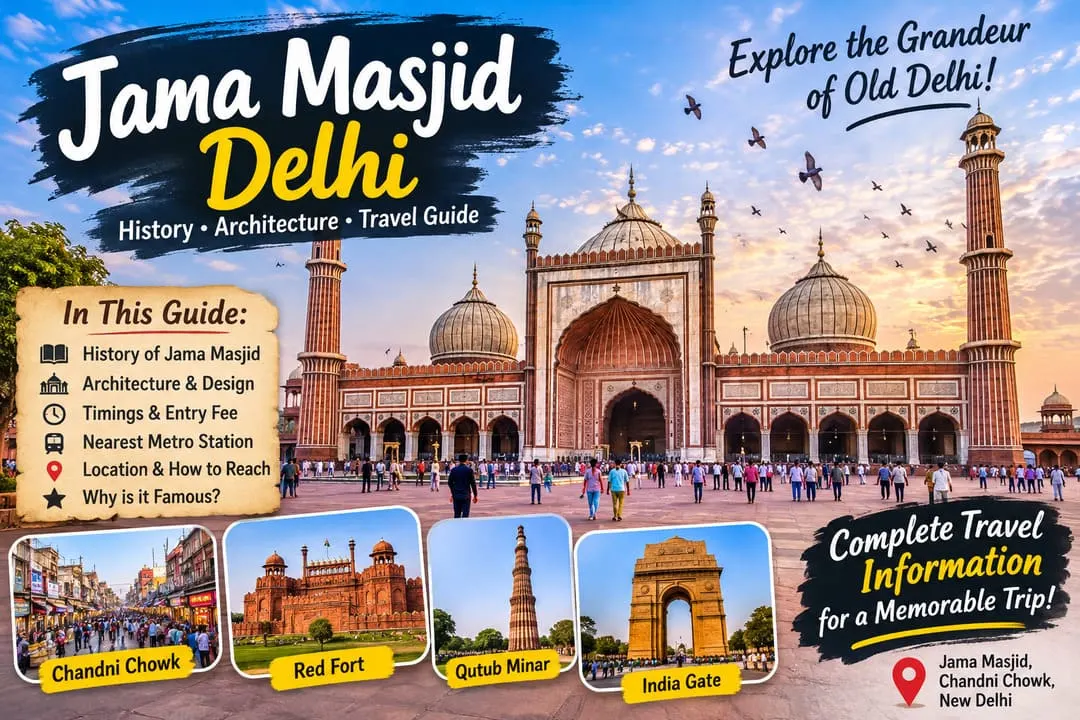
1. Jama Masjid
Jama Masjid is one of the most famous historical and religious landmarks in Old Delhi.
Built by Shah Jahan, the mosque represents another important example of Mughal architecture.
Its large courtyard, red sandstone construction, and marble details make it a significant heritage destination.
Distance: Approximately 1–1.5 km
Best For: Architecture, history and religious heritage.
2. Chandni Chowk
Chandni Chowk is one of Delhi’s oldest and most famous markets.
The market is known for traditional shops, jewelry, textiles, wedding shopping, street food, and historic lanes.
A visit to Chandni Chowk offers a different experience from exploring Red Fort because it introduces visitors to the everyday culture of Old Delhi.
Distance: Approximately 500 meters to 1 km, depending on the entrance and destination
Best For: Shopping, food and heritage walks.
3. Gurudwara Sis Ganj Sahib
Gurudwara Sis Ganj Sahib is an important Sikh religious site located in Chandni Chowk.
The gurudwara is associated with the martyrdom of Guru Tegh Bahadur Ji and is visited by devotees throughout the year.
Visitors can experience the peaceful atmosphere and learn about Sikh history.
Distance: Approximately 1 km
Best For: Spiritual visits and religious history.
4. Fatehpuri Masjid
Fatehpuri Masjid is a historic mosque situated at the western end of Chandni Chowk.
It was built during the Mughal period and remains an important religious and architectural landmark in Old Delhi.
Distance: Approximately 1.5–2 km
Best For: Historical architecture and heritage exploration.
5. Khari Baoli
Khari Baoli is one of the most famous spice markets in Old Delhi.
The market is known for its colourful spices, dry fruits, herbs and traditional trading activities.
Visitors interested in photography, food culture and local markets will find this area fascinating.
Distance: Approximately 1.5–2 km
Best For: Spices, photography and market culture.
6. Raj Ghat
Raj Ghat is the memorial dedicated to Mahatma Gandhi.
Surrounded by greenery, it provides a peaceful environment away from the busy streets of Old Delhi.
Distance: Approximately 3–4 km
Best For: History, remembrance and peaceful surroundings.
7. National Gandhi Museum
The National Gandhi Museum provides information about Mahatma Gandhi’s life, philosophy and role in India’s independence movement.
It is an educational attraction for visitors interested in modern Indian history.
Distance: Approximately 3–4 km
Best For: History and educational visits.
8. Daryaganj
Daryaganj is a historic neighbourhood known for books, markets and traditional food.
The area is particularly popular among book lovers and visitors exploring the cultural side of Old Delhi.
Distance: Approximately 2–3 km
Best For: Books, food and local culture.
Other Famous Historical Places in Delhi
If you have additional time, consider visiting:
- Qutub Minar
- Humayun’s Tomb
- Purana Qila
- India Gate
- Jantar Mantar
- Agrasen ki Baoli
- Safdarjung Tomb
- Lodhi Garden
These attractions are located in different parts of Delhi and are best explored through a separate sightseeing itinerary.
For a broader travel guide, explore Best Places to Visit in Delhi and discover more historical monuments, gardens, museums, religious sites and tourist attractions across the capital.
Markets Near Red Fort
Old Delhi is a paradise for shoppers who enjoy traditional markets, street shopping and local craftsmanship.
Chandni Chowk Market
Chandni Chowk is famous for wedding shopping, sarees, lehengas, jewellery, traditional clothing and wholesale products.
It is particularly popular among people looking for Indian wedding outfits and traditional fashion.
Kinari Bazaar
Kinari Bazaar is known for wedding accessories, decorative borders, embroidery materials, lace, ribbons and traditional embellishments.
It is a popular shopping destination for designers, wedding planners and people preparing for Indian celebrations.
Dariba Kalan
Dariba Kalan is famous for silver jewellery and traditional ornaments.
Visitors interested in jewellery shopping can explore its many established shops.
Khari Baoli Market
Khari Baoli is a major destination for spices, dry fruits, herbs and food ingredients.
The market is especially interesting for travellers who want to experience Delhi’s traditional wholesale trading culture.
Sadar Bazaar
Sadar Bazaar is one of Delhi’s important wholesale markets.
It offers a wide range of products, including household items, accessories, toys and general merchandise.
Shopping Tip: Old Delhi markets can become crowded, especially on weekends and during wedding seasons. Keep your belongings secure and confirm prices before purchasing.
Famous Food Near Red Fort
A trip to Red Fort is incomplete without exploring the food culture of Old Delhi.
The neighbourhood is famous for traditional North Indian dishes, Mughlai food, sweets, snacks and street food.
Paranthe
Old Delhi is widely known for its traditional parathas.
You can explore stuffed parathas prepared with ingredients such as potato, paneer, cauliflower and other fillings.
They are commonly served with chutneys, pickles and accompanying dishes.
Chole Bhature
Chole bhature is one of Delhi’s most popular dishes.
The combination of spicy chickpeas and fluffy fried bread is a favourite among locals and tourists.
Chaat
Delhi’s street food culture includes several popular chaat varieties:
- Aloo tikki
- Papdi chaat
- Dahi bhalla
- Golgappe
- Samosa chaat
These snacks offer a delicious introduction to the city’s food traditions.
Jalebi
Jalebi is a popular sweet made by frying batter into spiral shapes and soaking it in sugar syrup.
Fresh jalebi is especially enjoyable when served warm.
Mughlai Food
Old Delhi is also famous for Mughlai-inspired dishes.
Visitors can explore kebabs, curries, biryani, korma and other traditional preparations.
The neighbourhood’s food culture reflects centuries of culinary influence from the Mughal period and later traditions.
Rabri and Traditional Sweets
Rabri, kulfi, halwa and other Indian sweets are widely enjoyed across Old Delhi.
They are excellent choices for travellers looking to finish their food exploration with something sweet.
Food Safety Tips
- Prefer busy shops with regular customer turnover.
- Choose freshly prepared food.
- Drink bottled or safely filtered water.
- Check hygiene before ordering.
- Be cautious with food that has been sitting uncovered for long periods.
Best Time to Visit Red Fort Delhi
The best time to visit Red Fort Delhi is generally between October and March.
During these months, Delhi’s weather is comparatively pleasant for sightseeing and outdoor exploration.
Winter: October to March
Winter is one of the most comfortable seasons for exploring historical monuments.
You can enjoy walking through the fort, visiting nearby markets and exploring Old Delhi without extreme heat.
However, December and January can bring fog and chilly mornings.
Summer: April to June
Delhi experiences intense summer heat.
If you visit during this period, prefer early morning sightseeing, carry water and wear comfortable clothing.
Monsoon: July to September
Monsoon brings occasional rain and humidity.
The greenery around historical monuments can look attractive, although rainfall may affect outdoor plans.
Recommended Visiting Time
For a comfortable experience, arrive around opening time and explore Red Fort before visiting Chandni Chowk for lunch.
Red Fort Delhi Travel Tips
A little planning can make your visit more comfortable.
- Check the latest opening hours before travelling.
- Book your entry ticket through the official ticketing system when available.
- Carry a valid identification document if required.
- Wear comfortable walking shoes.
- Keep water with you, subject to monument security rules.
- Avoid carrying prohibited items.
- Follow photography restrictions and instructions.
- Respect religious sites near the fort.
- Keep your belongings secure in crowded markets.
- Use the metro to avoid traffic and parking difficulties.
- Allow extra time for security checks.
- Check special restrictions during national events.
One-Day Old Delhi Travel Itinerary
If you want to explore Red Fort and nearby attractions in a single day, this itinerary is a practical option.
| Time | Activity |
| 9:30 AM | Arrive at Red Fort |
| 9:45 AM – 12:00 PM | Explore Red Fort |
| 12:00 PM – 12:30 PM | Walk towards Chandni Chowk |
| 12:30 PM – 1:30 PM | Lunch in Old Delhi |
| 1:30 PM – 2:30 PM | Explore Chandni Chowk |
| 2:30 PM – 3:00 PM | Visit Gurudwara Sis Ganj Sahib |
| 3:00 PM – 4:00 PM | Explore Khari Baoli or nearby markets |
| Evening | Enjoy Old Delhi food or attend a separately ticketed show |
The itinerary can be adjusted according to your interests, weather and walking pace.
If you prefer a relaxed visit, spend more time inside the Red Fort and explore fewer markets.
Explore More Places to Visit in Delhi
Red Fort is one of the most remarkable historical attractions in Delhi, but the capital has much more to offer beyond its magnificent Mughal architecture. From ancient monuments and beautiful gardens to vibrant markets, religious landmarks and traditional food, Delhi offers countless experiences for every type of traveller. Explore our complete guide to best places to visit in Delhi to discover more famous tourist attractions, historical places, cultural experiences and exciting destinations across the capital.
If you want to travel beyond Delhi, North India offers an incredible combination of mountains, royal heritage, spiritual destinations and breathtaking landscapes. Discover our detailed travel guide to places to visit in North India, featuring popular hill stations, historical forts, ancient temples, beautiful cities and unforgettable travel experiences across the region.
For travellers planning a wider journey across the country, our comprehensive guide to places to visit in India covers India’s diverse destinations, cultures, historical landmarks, natural attractions, traditional food and travel experiences. Whether you are exploring Delhi for a weekend or planning a longer Indian holiday, these guides will help you discover more incredible places.
Conclusion
Red Fort Delhi is much more than a historical monument. It is a place where Mughal architecture, royal traditions, India’s independence movement and modern national identity come together.
From its magnificent red sandstone walls and elegant marble pavilions to the lively streets of Chandni Chowk, the Red Fort offers a memorable experience for anyone exploring the capital.
Whether you are interested in Red Fort history, Mughal art and architecture, historical places in Delhi, traditional markets or authentic Delhi food, this destination deserves a place on your travel itinerary.
Plan your visit, explore the surrounding neighbourhood and experience the heritage of Old Delhi through one of India’s most iconic monuments.
FAQs
1. Where is Red Fort located in Delhi?
Red Fort is located on Netaji Subhash Marg in Old Delhi, near Chandni Chowk and the historic walled city.
2. Which Mughal emperor built the Red Fort in Delhi?
Mughal Emperor Shah Jahan built Red Fort. Construction started in 1639 and was completed in 1648.
3. What is Red Fort famous for?
Red Fort is famous for its Mughal architecture, red sandstone walls, royal pavilions, historical significance and annual Independence Day celebrations.
4. What is the Red Fort Delhi timing?
The commonly published visiting hours are 9:30 AM to 4:30 PM, Tuesday to Sunday. The monument is generally closed on Mondays.
5. What is the Red Fort closing time?
The regular Red Fort closing time is approximately 4:30 PM.
6. What is the Red Fort Delhi ticket price?
The commonly listed entry fee is approximately ₹35 for Indian visitors and ₹550 online or ₹600 at the counter for foreign visitors. Children below 15 years generally receive free entry. Always check current rates before visiting.
7. How can I book Lal Qila tickets online?
You can book tickets through the official ASI monument ticketing portal by selecting Red Fort, choosing your visit date and completing the payment.
8. Which metro station is nearest to Red Fort?
Lal Qila Metro Station on the Violet Line is one of the most convenient metro stations for visiting Red Fort.
9. How much time is required to explore Red Fort?
Most visitors should allow approximately 2–3 hours to explore the major structures and historical attractions inside the fort.
10. What are the best places to visit near Red Fort?
Popular nearby attractions include Chandni Chowk, Jama Masjid, Gurudwara Sis Ganj Sahib, Khari Baoli, Fatehpuri Masjid and Raj Ghat.