





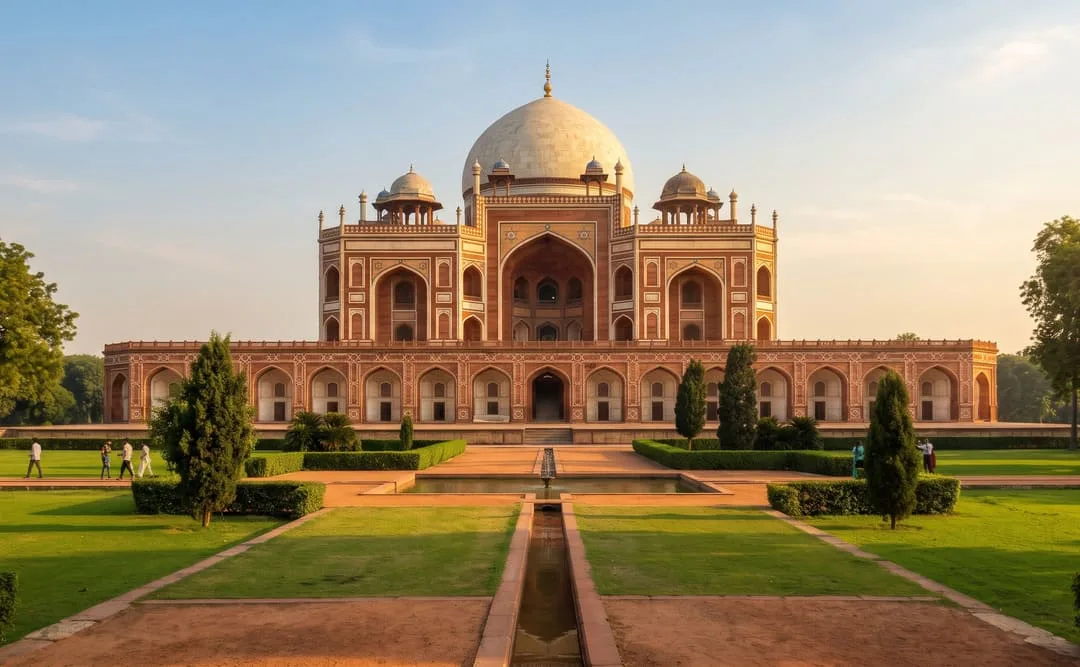
Humayun’s Tomb Delhi is one of the most beautiful historical monuments in India’s capital and an essential stop for anyone interested in Mughal history, architecture, and heritage tourism. Surrounded by landscaped gardens, impressive gateways, and centuries-old structures, this UNESCO World Heritage Site offers a peaceful escape from the busy streets of Delhi.
Located in Nizamuddin East, Humayun’s Tomb is particularly famous for its magnificent red sandstone structure, white marble dome, symmetrical design, and Persian-inspired Charbagh gardens. It is also considered an important architectural predecessor to the Taj Mahal, making it a fascinating destination for history lovers and first-time visitors to Delhi.
Whether you are planning a sightseeing trip, searching for Humayun Tomb Delhi timings, checking the entry fee, or looking for places to visit near Humayun Tomb, this travel guide covers everything you need to know before your visit.
Table of Contents
| 1. Humayun’s Tomb Delhi: Quick Information 2. Why Is Humayun’s Tomb Delhi Famous? 3. Humayun Tomb Delhi History 4. Humayun Tomb Architecture 5. Humayun Tomb Delhi Timings 6. Humayun Tomb Entry Fee and Ticket Price 7. Humayun Tomb Location 8. Humayun Tomb Delhi Near Metro Station 9. Things to See Inside Humayun’s Tomb Complex 10. Places to Visit Near Humayun Tomb 11. One-Day Delhi Sightseeing Itinerary Including Humayun’s Tomb 12. Best Time to Visit Humayun’s Tomb for Photography 13. Travel Tips for Visiting Humayun’s Tomb Delhi 14. Is Humayun’s Tomb Worth Visiting? 15. Frequently Asked Questions |
Humayun’s Tomb Delhi: Quick Information
| Information | Details |
| Monument Name | Humayun’s Tomb |
| Location | Nizamuddin East, Mathura Road, Delhi |
| Historical Period | Mughal Empire |
| Built For | Emperor Humayun |
| Commissioned By | Empress Bega Begum |
| Construction Period | 1560s–1570 |
| Architect | Mirak Mirza Ghiyath |
| Architecture | Mughal, Persian and Indian influences |
| UNESCO Status | World Heritage Site |
| UNESCO Inscription | 1993 |
| Nearest Metro | JLN Stadium / Jangpura |
| Opening | Daily |
| Timings | Sunrise to sunset or as notified by ASI |
| Entry Fee | Paid monument |
| Best Visit Duration | Approximately 1.5–2.5 hours |
| Ideal Visitors | History lovers, families, photographers and tourists |
Why Is Humayun’s Tomb Delhi Famous?
Humayun’s Tomb is famous for being one of the earliest grand Mughal garden mausoleums in India. Its design introduced architectural elements that later became prominent in Mughal monuments, including the Taj Mahal.
The monument is admired for its:
- Beautiful red sandstone and white marble construction.
- Large double dome surrounded by decorative chhatris.
- Persian-inspired Charbagh garden layout.
- Symmetrical architecture and impressive entrance gateways.
- Historical connection with the Mughal dynasty.
- UNESCO World Heritage recognition.
- Peaceful surroundings and picturesque photography spots.
Unlike many crowded tourist attractions, the gardens surrounding Humayun’s Tomb offer visitors an opportunity to explore Delhi’s historical heritage at a relaxed pace.
Humayun Tomb Delhi History
The history of Humayun’s Tomb is closely connected with the Mughal Empire and the life of Emperor Humayun, the second Mughal ruler of India.
Who Was Humayun?
Humayun was the son of Babur, the founder of the Mughal Empire in India. He became emperor in 1530 but faced several political and military challenges during his reign.
After losing control of much of his territory to Sher Shah Suri, Humayun spent years in exile before returning to India and recovering his empire in 1555.
Unfortunately, his restored reign was short-lived. Humayun died in 1556 after falling from the stairs of his library in Delhi.
His death marked the beginning of a remarkable architectural legacy that would eventually influence some of India’s most famous monuments.
Who Built Humayun’s Tomb?
Humayun’s Tomb was commissioned by his widow, Empress Bega Begum, also known as Haji Begum.
Construction began during the 1560s and was completed around 1570. The project was designed by Persian architect Mirak Mirza Ghiyath, who worked with Indian craftsmen to create a monument combining Persian architectural traditions with local building techniques.
The tomb was constructed on a grand scale, reflecting the importance of the Mughal emperor and the growing artistic ambitions of the Mughal dynasty.
Humayun’s Tomb and the Mughal Dynasty
The monument was not intended only for Emperor Humayun. Over the centuries, several members of the Mughal royal family were also buried within its complex.
Because of the numerous royal graves found inside, Humayun’s Tomb is sometimes described as the dormitory of the Mughals or the necropolis of the Mughal dynasty.
The site also has an important connection with the final chapter of Mughal history. During the uprising of 1857, the last Mughal emperor, Bahadur Shah Zafar, took refuge at Humayun’s Tomb before being captured by British forces.
Humayun’s Tomb UNESCO World Heritage Site
Humayun’s Tomb was added to the UNESCO World Heritage List in 1993.
Its importance lies in its architectural innovation, monumental scale, garden design, and influence on later Mughal buildings.
The monument is also part of a larger historical landscape containing several other Mughal-era tombs, gateways, gardens, and architectural structures.
This makes Humayun’s Tomb more than a single monument. It is an important heritage complex that represents the development of Mughal architecture in India.
Humayun Tomb Architecture
Humayun Tomb architecture is one of the most fascinating aspects of the monument. It represents a combination of Persian design principles and traditional Indian architectural elements.
The structure introduced a more monumental approach to Mughal funerary architecture and became an inspiration for later imperial buildings.
1. Charbagh Garden Architecture
The Charbagh garden is one of the most distinctive features of Humayun’s Tomb.
The term Charbagh refers to a four-part garden layout. The garden is divided into four main sections by intersecting pathways and water channels.
This design was influenced by Persian garden traditions and symbolically represented the concept of paradise.
Visitors can walk through the garden pathways, admire the symmetrical layout, and enjoy different views of the monument from various angles.
2. Red Sandstone and White Marble
Humayun’s Tomb is particularly famous for its striking combination of red sandstone and white marble.
The red sandstone creates a bold architectural appearance, while the marble adds contrast and elegance to the structure.
This material combination became an important feature of Mughal architecture and can also be seen in several later monuments.
3. Double Dome
The monument is crowned by a magnificent double dome made of white marble.
A double dome consists of two layers, allowing the exterior dome to appear taller and more impressive while maintaining suitable proportions for the interior space.
The dome is one of the most recognizable elements of Humayun’s Tomb and gives the monument its distinctive skyline.
4. Chhatris and Decorative Elements
The central dome is surrounded by smaller pillared kiosks called chhatris.
These decorative structures reflect Indian architectural influences and contribute to the monument’s balanced appearance.
The combination of Persian arches, marble decoration, and Indian-style chhatris makes Humayun’s Tomb a remarkable example of Indo-Islamic architecture.
5. Symmetrical Design
The entire monument is designed around symmetry.
Its central position within the garden, balanced entrances, repeated arches, and geometric layout create a sense of harmony.
This architectural symmetry is one reason Humayun’s Tomb remains such an important example of Mughal design.
Humayun’s Tomb vs Taj Mahal
Humayun’s Tomb is often compared with the Taj Mahal because both monuments share important architectural characteristics.
| Feature | Humayun’s Tomb | Taj Mahal |
| Location | Delhi | Agra |
| Built For | Emperor Humayun | Mumtaz Mahal |
| Patron | Bega Begum | Shah Jahan |
| Architecture | Early mature Mughal style | Mature Mughal style |
| Garden | Charbagh | Mughal garden setting |
| Main Material | Red sandstone and white marble | Predominantly white marble |
| Dome | Double dome | Large marble dome |
| UNESCO Status | World Heritage Site | World Heritage Site |
Humayun’s Tomb is historically important because it helped establish architectural ideas that were developed further in the Taj Mahal.
Humayun Tomb Delhi Timings
If you are planning a visit, checking Humayun Tomb Delhi timings is important.
The monument is generally open every day, including weekends and most public holidays.
| Visiting Information | Details |
| Opening Time | Sunrise |
| Closing Time | Sunset / as notified by ASI |
| Open Days | Daily |
| Recommended Visit | Morning or late afternoon |
The Archaeological Survey of India and official tourism information may display different closing-time descriptions. Visitors should check the latest monument information before travelling.
Best Time to Visit Humayun’s Tomb
The best time to visit Humayun’s Tomb is during the early morning or late afternoon.
Morning visits are particularly enjoyable because the gardens are quieter and the weather is generally more comfortable.
Late afternoon is another excellent option for photography, especially when sunlight creates beautiful contrasts on the red sandstone walls and white marble dome.
Best Season to Visit
October to March is generally the most comfortable period for exploring Delhi’s historical monuments.
During winter, the gardens and outdoor walking areas are more pleasant than during the hot summer months.
If you visit during summer, carrying water, wearing comfortable footwear, and avoiding the hottest part of the day can make your experience more enjoyable.
Humayun Tomb Entry Fee and Ticket Price
Humayun Tomb entry fee is an important consideration when planning your Delhi sightseeing budget.
The monument is managed by the Archaeological Survey of India, and entry tickets are required for most visitors.
Humayun Tomb Ticket Price
According to the Archaeological Survey of India’s published ticket information:
| Visitor Category | Online Ticket | Cash Ticket |
| Indian visitors and eligible SAARC/BIMSTEC categories | ₹35 | ₹50 |
| Other foreign visitors | ₹550 | ₹600 |
| Children below 15 years | Free | Free |
The applicable visitor category and concessions should be confirmed on the official ticketing system before booking.
How to Book Humayun’s Tomb Tickets
Visitors can book tickets online through the official ASI monument ticketing portal.
Online booking is convenient because it can help reduce time spent waiting at the ticket counter.
You can also check ticket availability and visitor categories before reaching the monument.
Official ticket booking: https://asi.payumoney.com/
For the latest monument information, visit the Archaeological Survey of India: https://asi.nic.in/
Important Ticket Information
- Keep your ticket available until you complete your visit.
- Check the ticket category carefully before purchasing.
- Follow monument photography and visitor regulations.
- Ticket prices may change through official notifications.
- Children below the specified age category may receive free entry.
Humayun Tomb Location
Humayun’s Tomb is located in Nizamuddin East, near Mathura Road, in the southern part of Delhi.
The monument is situated close to the famous Hazrat Nizamuddin Dargah and is easily accessible from several important areas of the city.
Humayun Tomb Address
Humayun’s Tomb
Nizamuddin East, Mathura Road
New Delhi, Delhi, India
The location is convenient for visitors exploring central and southern Delhi, including India Gate, Lodhi Garden, and other historical attractions.
How to Reach Humayun’s Tomb
Visitors can reach Humayun’s Tomb by metro, taxi, auto-rickshaw, bus, or private vehicle.
The nearest metro stations are located on Delhi’s Violet Line, making the monument accessible from several major parts of the city.
Humayun Tomb Delhi Near Metro Station
Searching for Humayun Tomb Delhi near metro station is common among tourists who prefer travelling through Delhi Metro.
The monument is accessible from more than one metro station, although the walking distance and convenience vary.
Nearest Metro Stations to Humayun’s Tomb
| Metro Station | Metro Line | Travel Information |
| JLN Stadium | Violet Line | Commonly used metro station for reaching the monument |
| Jangpura | Violet Line | Another convenient station for visitors |
| Hazrat Nizamuddin | Pink Line | Useful for visitors arriving through the railway station area |
JLN Stadium and Jangpura are commonly mentioned among the nearest metro stations to Humayun’s Tomb.
How to Reach Humayun’s Tomb from JLN Stadium Metro Station
- Take the Delhi Metro Violet Line.
- Get off at JLN Stadium Metro Station.
- Exit the station and take an auto-rickshaw, cab, or local transport.
- Follow the route towards Mathura Road and Nizamuddin East.
- Reach the entrance of Humayun’s Tomb.
Walking may also be possible depending on your preferred route, but local transport can be more convenient during hot weather.
How to Reach Humayun’s Tomb from Jangpura Metro Station
Jangpura Metro Station is another useful option for reaching the monument.
After exiting the station, visitors can take an auto-rickshaw or taxi towards Nizamuddin East.
The exact travel time depends on traffic, the station exit used, and the route selected.
Things to See Inside Humayun’s Tomb Complex
The Humayun’s Tomb complex contains several architectural attractions beyond the main mausoleum.
Visitors who explore the entire complex can discover smaller tombs, historic gateways, garden structures, and monuments connected with the Mughal period.
1. Main Humayun’s Tomb
The central mausoleum is the main attraction.
Its red sandstone exterior, white marble dome, impressive arches, and elevated platform make it one of Delhi’s most recognizable historical landmarks.
Visitors can admire the structure from different sections of the garden and explore its architectural details.
2. Isa Khan’s Tomb
Isa Khan’s Tomb is another important historical monument within the larger complex.
It predates Humayun’s Tomb and represents an earlier phase of architectural development in Delhi.
Its octagonal structure, decorative features, and enclosed garden make it an interesting attraction for visitors interested in medieval Indian architecture.
3. Bu Halima’s Tomb
Bu Halima’s Tomb is situated near one of the entrances to the complex.
It is a smaller historical structure that provides an additional glimpse into the architectural diversity of the site.
4. Afsarwala Tomb and Mosque
Afsarwala Tomb and its associated mosque are located within the historical complex.
These structures demonstrate the variety of tomb and religious architecture found around Humayun’s Tomb.
5. Barber’s Tomb
The Barber’s Tomb, also known as Nai-ka-Gumbad, is a small tomb located within the complex.
Its architectural design is simpler than the main mausoleum, but it adds to the historical significance of the surrounding garden.
6. Nila Gumbad
Nila Gumbad, meaning Blue Dome, is another notable historical monument associated with the Humayun’s Tomb landscape.
Its blue glazed tile decoration makes it visually distinctive from several surrounding structures.
Visitors interested in exploring Delhi’s lesser-known Mughal monuments may find this area particularly interesting.
Places to Visit Near Humayun Tomb
There are several interesting places to visit near Humayun Tomb, making it easy to plan a half-day or full-day sightseeing trip around Delhi.
These attractions include historical monuments, gardens, religious sites, and cultural destinations.
1. Sunder Nursery
Sunder Nursery is one of the most beautiful green spaces near Humayun’s Tomb.
The heritage park combines landscaped gardens, restored monuments, walking paths, and peaceful outdoor spaces.
It is an excellent destination for nature lovers, photographers, families, and anyone looking for a relaxing experience in Delhi.
Visitors can explore Sunder Nursery before or after visiting Humayun’s Tomb.
2. Hazrat Nizamuddin Dargah
Hazrat Nizamuddin Dargah is one of Delhi’s most important Sufi religious sites.
The shrine is dedicated to the revered Sufi saint Hazrat Nizamuddin Auliya and attracts devotees from different parts of India.
The surrounding lanes are known for their historic atmosphere, traditional food, and cultural significance.
Visitors should dress respectfully and follow the local customs when entering religious areas.
3. India Gate
India Gate is one of the most famous landmarks in Delhi.
Located in the heart of the capital, it is a popular destination for evening walks, photography, and sightseeing.
Visitors can combine Humayun’s Tomb with India Gate for a convenient Delhi sightseeing itinerary.
4. Lodhi Garden
Lodhi Garden is a beautiful public garden known for its historic tombs, greenery, and peaceful walking paths.
It is particularly popular among morning walkers, photographers, and people interested in Delhi’s medieval architecture.
The garden contains several monuments associated with the Sayyid and Lodi dynasties.
5. Purana Qila
Purana Qila, also known as Old Fort, is another important historical attraction in Delhi.
Its massive walls, historic gateways, and archaeological significance make it an interesting destination for history lovers.
The fort is particularly suitable for visitors planning a Mughal and medieval Delhi sightseeing tour.
6. National Zoological Park
The National Zoological Park is located near Purana Qila.
Families travelling with children may consider including the zoo in their Delhi itinerary.
It is a separate attraction and requires additional time and entry planning.
7. Khan-i-Khanan’s Tomb
Khan-i-Khanan’s Tomb is another remarkable Mughal monument in the Nizamuddin area.
It is associated with Abdul Rahim Khan-i-Khanan, an important noble and military commander during the Mughal period.
Its architectural details and restoration history make it a worthwhile stop for heritage enthusiasts.
8. Qutub Minar
Qutub Minar is another UNESCO World Heritage Site in Delhi.
The monument is famous for its towering minaret, historic complex, and early Indo-Islamic architecture.
Although it is farther from Humayun’s Tomb than the nearby attractions, it can be included in a full-day Delhi sightseeing itinerary.
For detailed information, explore our guide to Qutub Minar Delhi.
One-Day Delhi Sightseeing Itinerary Including Humayun’s Tomb
If you are planning a Delhi sightseeing trip, you can combine Humayun’s Tomb with several nearby attractions.
Morning
- Visit Humayun’s Tomb.
- Explore the Charbagh garden and architectural details.
- Discover Isa Khan’s Tomb and other historical structures.
- Walk around the monument complex.
Late Morning
- Visit Sunder Nursery.
- Explore its landscaped gardens and heritage structures.
- Enjoy a relaxing walk or photography session.
Afternoon
- Visit India Gate.
- Explore the surrounding central Delhi area.
- Enjoy lunch at a nearby restaurant or café.
Evening
- Visit Lodhi Garden.
- Explore the historic tombs and garden pathways.
- Enjoy a peaceful evening in Delhi.
This itinerary is suitable for visitors interested in Delhi’s architecture, heritage, and outdoor attractions.
Best Time to Visit Humayun’s Tomb for Photography
Humayun’s Tomb is one of the most photogenic monuments in Delhi.
The combination of red sandstone, white marble, green gardens, and symmetrical architecture creates excellent photography opportunities.
Photography Tips
- Visit early in the morning for softer light.
- Capture the monument from the garden pathways.
- Photograph the central dome against the sky.
- Include the Charbagh garden in wide-angle photographs.
- Explore different perspectives around the main structure.
- Avoid disturbing other visitors while taking photographs.
The monument is particularly attractive during pleasant winter mornings and late afternoons.
Travel Tips for Visiting Humayun’s Tomb Delhi
Before visiting Humayun’s Tomb, keep these practical travel tips in mind.
- Wear comfortable shoes because the complex requires walking.
- Carry drinking water, especially during summer.
- Check official timings before travelling.
- Book tickets online if convenient.
- Respect the monument and avoid touching fragile structures.
- Follow photography restrictions and visitor instructions.
- Allow enough time to explore the gardens.
- Consider visiting Sunder Nursery during the same trip.
- Avoid visiting during the hottest afternoon hours in summer.
- Check accessibility information if travelling with elderly visitors or people with mobility needs.
Is Humayun’s Tomb Worth Visiting?
Yes, Humayun’s Tomb is one of the most worthwhile historical attractions in Delhi.
It offers an excellent combination of architecture, history, gardens, and cultural significance.
For first-time visitors to Delhi, the monument provides an opportunity to understand the development of Mughal architecture and appreciate the city’s historical heritage.
Even if you have already visited other Mughal monuments, Humayun’s Tomb offers a different experience because of its peaceful garden setting and distinctive architectural design.
Conclusion
Humayun’s Tomb Delhi is one of the most significant historical attractions in India’s capital. Its magnificent Mughal architecture, peaceful Charbagh gardens, fascinating history, and UNESCO World Heritage recognition make it a memorable destination for visitors.
From exploring the main mausoleum to discovering nearby attractions such as Sunder Nursery, Lodhi Garden, and India Gate, the area offers plenty of opportunities to experience Delhi’s cultural heritage.
If you are planning a trip to Delhi, Humayun’s Tomb deserves a place on your sightseeing itinerary. It is an excellent destination for anyone interested in history, architecture, photography, or simply exploring some of the most beautiful places in Delhi.
Explore more destinations in our complete guide to Places to Visit in India, discover the best attractions across North India, and plan your next journey with our detailed Delhi Travel Guide.
FAQs
1. Where is Humayun’s Tomb located in Delhi?
Humayun’s Tomb is located in Nizamuddin East, near Mathura Road, in Delhi, India.
2. What are Humayun Tomb Delhi timings?
Humayun’s Tomb generally opens daily from sunrise. Visitors should check the current closing time through the Archaeological Survey of India before planning their visit.
3. What is the Humayun Tomb entry fee?
The published ASI online ticket price is ₹35 for Indian and eligible SAARC/BIMSTEC visitors and ₹550 for other foreign visitors. Counter prices may be higher. Children below 15 years generally receive free entry.
4. Which metro station is nearest to Humayun’s Tomb?
JLN Stadium and Jangpura on the Violet Line are commonly used metro stations for reaching Humayun’s Tomb.
5. How much time is required to visit Humayun’s Tomb?
Most visitors should allow approximately 1.5 to 2.5 hours to explore the main mausoleum, gardens, and surrounding historical structures.
6. Is Humayun’s Tomb a UNESCO World Heritage Site?
Yes. Humayun’s Tomb was inscribed on the UNESCO World Heritage List in 1993.
7. Who built Humayun’s Tomb?
Humayun’s Tomb was commissioned by Empress Bega Begum and designed by Persian architect Mirak Mirza Ghiyath.
8. Why is Humayun’s Tomb important in Mughal architecture?
It is an early monumental Mughal garden-tomb that introduced architectural features later developed in major Mughal monuments, including the Taj Mahal.
9. What are the best places to visit near Humayun’s Tomb?
Some of the best nearby attractions include Sunder Nursery, Hazrat Nizamuddin Dargah, India Gate, Lodhi Garden, Purana Qila, and Khan-i-Khanan’s Tomb.
10. Can Humayun’s Tomb and Sunder Nursery be visited together?
Yes. Sunder Nursery is located next to the Humayun’s Tomb heritage landscape, making it convenient to explore both during the same sightseeing trip.
11. Is Humayun’s Tomb suitable for family visits?
Yes. The monument and gardens are suitable for family sightseeing, although visitors should consider walking distances, weather, and accessibility requirements.