





Delhi is home to some of India’s most remarkable historical monuments, cultural attractions and religious destinations. Among these, Akshardham Temple Delhi stands out for its extraordinary architecture, peaceful atmosphere and impressive presentation of Indian culture and spirituality.
Officially known as Swaminarayan Akshardham, this magnificent temple complex attracts visitors from different parts of India and around the world. It is much more than a traditional place of worship. The complex brings together beautifully carved stone structures, spiritual exhibitions, cultural experiences, landscaped gardens and an impressive evening water show.
Whether you are interested in Hindu traditions, ancient Indian architecture, cultural history or simply exploring one of the most beautiful places in the capital, Akshardham deserves a place on your Delhi travel itinerary.
The temple is particularly popular among families, tourists, students and international visitors who want to experience India’s cultural heritage in one destination.
In this guide, you will discover everything about Akshardham Temple Delhi, including its history, architecture, timings, ticket prices, nearest metro station, attractions inside the complex and nearby places worth exploring.
Table of Contents
| 1. Quick Information About Akshardham Temple Delhi 2. Akshardham Temple Delhi Timings 3. Akshardham Temple Ticket Price 4. Akshardham Temple History 5. Akshardham Temple Architecture 6. Things to See Inside Akshardham Temple 7. Akshardham Temple Location 8. Akshardham Temple Delhi Nearest Metro 9. What to Know Before Visiting 10. Best Time to Visit Akshardham 11. How Much Time Is Required? 12. Places to Visit Near Akshardham Temple 13. Famous Hindu Temples in Delhi 14. One-Day Delhi Sightseeing Itinerary 15. Travel Tips for Visiting Akshardham 16. Frequently Asked Questions |
Quick Information About Akshardham Temple Delhi
If you are planning a visit, here are the essential details to know before travelling.
| Information | Details |
| Temple Name | Swaminarayan Akshardham |
| Popular Name | Akshardham Temple Delhi |
| Location | NH 24, New Delhi, Delhi 110092 |
| Dedicated To | Bhagwan Swaminarayan |
| Inauguration Date | 6 November 2005 |
| Established By | BAPS |
| Nearest Metro | Akshardham Metro Station |
| Metro Line | Blue Line |
| Complex Entry Fee | Free |
| Exhibition Ticket | Paid |
| Water Show | Paid |
| Closed Day | Every Monday |
| Best Time to Visit | October to March |
| Visit Duration | Around 3–5 hours, depending on activities |
Akshardham Temple Delhi Timings
Knowing the Akshardham Temple Delhi timings is important because different attractions inside the complex follow different schedules. The temple, exhibitions, Abhishek Mandap and water show do not necessarily operate at the same time.
The complex generally welcomes visitors from Tuesday to Sunday and remains closed every Monday.
Daily Opening and Closing Timings
| Visitor Information | Timings |
| Opening Days | Tuesday to Sunday |
| Weekly Closing Day | Monday |
| First Entry | 10:00 AM |
| Last Entry | 6:30 PM |
| Mandir Darshan | 10:00 AM – 8:00 PM |
| Abhishek Mandap | 10:00 AM – 8:00 PM |
| Exhibition Ticket Window | 11:00 AM – 6:00 PM |
| Water Show | After sunset |
The water show is currently listed at approximately 7:30 PM on the official visitor information page. Its timing may change depending on the season and sunset.
Best Time to Visit Akshardham Temple
The best time to visit Akshardham depends on the kind of experience you want.
- Morning: A good option for exploring the temple, gardens and architecture with enough time for the exhibitions.
- Afternoon: Suitable for visitors who want to experience the cultural exhibitions and spend time inside the complex.
- Evening: Ideal for those interested in the illuminated temple and the musical water show.
If you want to experience most of the attractions, consider arriving around opening time. This gives you more flexibility to explore without rushing through the different activities.
Best Season to Visit
October to March is generally the most comfortable period to explore Delhi because the weather is cooler than during the summer months.
Summers in Delhi can be extremely hot, particularly during May and June. If you visit during this period, plan your travel carefully and avoid unnecessary outdoor walking during peak afternoon heat.
Important: Akshardham remains closed every Monday. Plan your visit between Tuesday and Sunday.
Akshardham Temple Ticket Price
One of the most useful things to know before visiting is that entry to Akshardham Temple and the main mandir is free. However, visitors need separate tickets for the exhibitions and water show.
Exhibition Ticket Price
The exhibition ticket covers all three cultural experiences: Sahajanand Darshan, Neelkanth Darshan and Sanskruti Darshan.
| Visitor Category | Ticket Price |
| Adults (12 years and above) | ₹260 |
| Senior Citizens (60 years and above) | ₹210 |
| Children (4–11 years) | ₹160 |
| Children below 4 years | Free |
Water Show Ticket Price
The Sahaj Anand Water Show is a separate attraction and requires an additional ticket.
| Visitor Category | Ticket Price |
| Adults (12 years and above) | ₹110 |
| Senior Citizens (60 years and above) | ₹110 |
| Children (4–11 years) | ₹80 |
| Children below 4 years | Free |
Is Akshardham Temple Entry Free?
Yes. Entry to the temple complex, main mandir and several outdoor attractions is free. You do not need to purchase an exhibition ticket just to enter the complex and have darshan.
However, the following experiences have separate charges:
- Sahajanand Darshan – Hall of Values
- Neelkanth Darshan – Giant Screen Film
- Sanskruti Darshan – Cultural Boat Ride
- Sahaj Anand Water Show
- Abhishek Puja donation
The Abhishek Darshan itself is free, while participating in the puja involves a ₹50 contribution as listed on the official website.
Tip: If you want to enjoy the complete cultural experience, plan your budget for both the exhibition and water show tickets. Check the ticket counter for availability before making your schedule.
Akshardham Temple History
The Akshardham Temple history is closely connected with Bhagwan Swaminarayan and the vision of preserving and presenting India’s spiritual and cultural traditions.
The temple was developed under the guidance and blessings of Pramukh Swami Maharaj, the spiritual leader of BAPS (Bochasanwasi Akshar Purushottam Swaminarayan Sanstha).
The idea behind Akshardham was to create a place where visitors could experience Indian culture, spiritual teachings, traditional architecture and the values of Hinduism.
Unlike many ancient temples that developed over several centuries, Akshardham was completed within a relatively short period through the collective efforts of thousands of artisans, volunteers and devotees.
When Was Akshardham Temple Built?
Swaminarayan Akshardham was inaugurated on 6 November 2005 in New Delhi.
Its construction took approximately five years. The project involved around 11,000 artisans and thousands of volunteers who contributed their skills and efforts to bring the vision to life.
The complex was developed using traditional Indian craftsmanship while incorporating modern visitor facilities and cultural presentation techniques.
Who Built Akshardham Temple Delhi?
The temple was established by BAPS under the spiritual guidance of Pramukh Swami Maharaj.
Its development involved:
- BAPS: The organisation responsible for developing and maintaining the temple.
- Pramukh Swami Maharaj: The spiritual leader whose vision and guidance inspired the project.
- Traditional artisans: Skilled craftspeople who worked on the intricate stone carvings and architectural elements.
- Volunteers: Thousands of volunteers contributed to the development and organisation of the complex.
Who Is Bhagwan Swaminarayan?
Bhagwan Swaminarayan, born in 1781, was a Hindu spiritual leader and the central figure of the Swaminarayan tradition.
His teachings emphasised devotion, morality, compassion, discipline, service and spiritual development.
The main mandir at Akshardham is dedicated to Bhagwan Swaminarayan and reflects the spiritual beliefs and traditions associated with his life and teachings.
Meaning of the Word Akshardham
The word Akshardham has a spiritual meaning.
- Akshar: Eternal or imperishable.
- Dham: Abode or divine residence.
Together, Akshardham refers to the eternal divine abode.
This meaning is reflected throughout the complex, where the architecture, sculptures and exhibitions communicate spiritual ideas and the importance of Indian cultural traditions.
Akshardham Temple Architecture
The Akshardham Temple architecture is one of its biggest attractions. The structure showcases traditional Indian temple design, detailed stone craftsmanship and symbolic sculptures inspired by Hindu traditions.
The temple’s appearance is especially impressive because of its detailed carvings, decorative pillars, domes, sculptures and beautifully designed entrances.
The architectural design reflects the traditional principles of Indian temple construction rather than modern concrete-based monumental architecture.
1. Traditional Hindu Temple Design
The main mandir follows traditional Hindu architectural principles, with a central sanctum, beautifully carved pillars, decorative ceilings and sculpted exterior surfaces.
Its design reflects the traditional temple-building heritage of India.
2. Pink Sandstone and White Marble
One of the most noticeable features of Akshardham is the combination of pink sandstone and white marble.
The sandstone gives the temple its warm appearance, while the marble adds elegance to several architectural details.
These materials contribute to the temple’s distinctive visual identity.
3. Intricate Stone Carvings
The temple contains thousands of detailed carvings depicting deities, spiritual figures, animals, flowers and elements of Indian culture.
Every section reflects the patience and craftsmanship of the artisans who worked on the project.
4. Gajendra Pith
Gajendra Pith is one of the most impressive architectural features of the temple.
It features beautifully carved elephants and sculptures that represent stories associated with nature, devotion, courage and compassion.
The elephants are not simply decorative elements. Their sculptures communicate different stories and symbolic messages.
5. Mandapams and Decorative Pillars
The interior of the mandir features beautifully decorated pillars and traditional architectural elements.
The detailed stonework showcases the skill of Indian artisans and reflects the importance of symmetry and craftsmanship in traditional temple architecture.
6. Domes and Shikhars
The temple’s domes and shikhars contribute to its grand appearance.
These architectural elements are inspired by traditional Hindu temple design and give the structure its distinctive skyline.
Why Is Akshardham Architecture Special?
Akshardham is special because it brings together traditional Indian craftsmanship, spiritual symbolism and monumental temple design in one complex.
Instead of relying on modern decorative materials, its architectural character is shaped by stonework, sculptures and traditional construction techniques.
For architecture enthusiasts, it offers an opportunity to appreciate the beauty of Indian temple design in a contemporary religious complex.
Things to See Inside Akshardham Temple Delhi
Akshardham is not limited to its main temple building. The complex has several attractions that introduce visitors to Indian history, spirituality, traditions and cultural achievements.
If you are visiting for the first time, these are the main attractions you should explore.
1. Akshardham Mandir
The main Akshardham Mandir is the spiritual centre of the entire complex. Dedicated to Bhagwan Swaminarayan, it features beautiful sculptures, traditional stone carvings, decorated pillars and a peaceful atmosphere.
Visitors can enter the mandir for darshan without purchasing an exhibition ticket.
The temple is particularly beautiful when sunlight falls on its sandstone exterior, highlighting the detailed carvings and architectural patterns.
2. Sahajanand Darshan – Hall of Values
Sahajanand Darshan is an exhibition that presents important human values through artistic displays, animatronic figures, films and storytelling.
It focuses on values such as:
- Compassion and kindness
- Non-violence
- Honesty and truthfulness
- Family relationships
- Humility and service
- Peace and spirituality
The exhibition is designed to make traditional values easier to understand through visual presentations.
It is particularly interesting for families and children because the stories communicate meaningful lessons in an engaging way.
3. Neelkanth Darshan – Giant Screen Film
Neelkanth Darshan is a large-format cinematic experience that follows the spiritual journey of Neelkanth Varni, the young form of Bhagwan Swaminarayan.
The film presents his journey across different parts of India and highlights the country’s natural beauty, spiritual traditions, landscapes and cultural heritage.
It is an interesting experience for visitors who want to learn about India’s religious and cultural history through cinema.
4. Sanskruti Darshan – Cultural Boat Ride
The Sanskruti Darshan boat ride takes visitors through different periods of Indian history and civilisation.
During this indoor experience, visitors learn about ancient Indian knowledge, education, science, art and cultural achievements.
The presentation includes historical scenes and displays representing India’s contributions to different fields.
The boat ride takes approximately 12 minutes and is a memorable part of the Akshardham experience.
5. Sahaj Anand Water Show
The Sahaj Anand Water Show is one of the most popular attractions at Akshardham.
Presented after sunset, this multimedia show combines water fountains, colourful lights, lasers, projections, sound effects and live performances.
The presentation is based on a story from the Kena Upanishad and communicates spiritual ideas through an impressive visual experience.
It is especially enjoyable for families and visitors who want to experience something different from a traditional temple visit.
Why should you watch it?
- Impressive water fountain performances.
- Colourful lighting and laser projections.
- Spiritual storytelling.
- A memorable evening experience.
The show generally takes place around 7:30 PM according to the currently published visitor schedule. Always confirm the actual show timing before planning your visit.
6. Bharat Upvan – Garden of India
Bharat Upvan, also known as the Garden of India, is a beautifully maintained garden featuring lawns, plants and bronze sculptures.
The sculptures honour personalities from Indian history, including national leaders, warriors, inspirational women and individuals who contributed to the country’s development.
It offers a peaceful outdoor environment where visitors can appreciate India’s historical personalities and cultural heritage.
7. Yogihriday Kamal – Lotus Garden
Yogihriday Kamal is a distinctive lotus-shaped garden designed around the idea of wisdom and inspiration.
The garden features quotations and thoughts from philosophers, scientists, spiritual leaders and influential personalities.
Its layout and landscaping make it an interesting place to explore while walking around the temple complex.
8. Abhishek Mandap
Abhishek Mandap offers visitors an opportunity to participate in a traditional Hindu ritual associated with Bhagwan Swaminarayan in his childhood form, Neelkanth Varni.
The ritual involves offering water while prayers are performed for peace, well-being and positive intentions.
Visitors can experience Abhishek Darshan without a charge, while participation in the puja has a listed contribution of ₹50 per person.
Akshardham Temple Location
The Akshardham Temple location is in eastern New Delhi, close to the Yamuna River and the Akshardham Metro Station.
The temple is situated along NH 24, making it accessible from different parts of Delhi and the National Capital Region.
Complete Address:
Swaminarayan Akshardham, NH 24, Pramukh Swami Maharaj Marg, New Delhi, Delhi 110092, India.
The temple’s location makes it convenient for visitors travelling from areas such as Noida, Mayur Vihar, Laxmi Nagar, Preet Vihar and central Delhi.
Akshardham Temple Delhi Nearest Metro
The Akshardham Temple Delhi nearest metro is Akshardham Metro Station, which is located on the Delhi Metro Blue Line.
It is one of the easiest ways to reach the temple, particularly if you are travelling from other parts of Delhi or Noida.
Nearest Metro Station Details
| Metro Information | Details |
| Nearest Metro Station | Akshardham |
| Metro Line | Blue Line |
| Walking Distance | Approximately 350 metres |
| Approximate Walking Time | 5–7 minutes |
| Nearest Exit | Follow the temple direction signs |
How to Reach Akshardham Temple from the Metro Station
Follow these simple steps:
- Take the Delhi Metro Blue Line and get down at Akshardham Metro Station.
- Exit the station and follow the directions towards the temple.
- Walk towards the main entrance.
- Follow the security and entry instructions provided by the temple authorities.
The walk is relatively short, so you generally do not need an auto-rickshaw or cab from the metro station.
How to Reach Akshardham from New Delhi Railway Station
If you are arriving at New Delhi Railway Station, the metro is a convenient option.
- Reach New Delhi Metro Station using the railway station’s Ajmeri Gate side.
- Take the Yellow Line towards the city centre.
- Change at Rajiv Chowk.
- Board the Blue Line towards Noida Electronic City.
- Get off at Akshardham Metro Station.
How to Reach Akshardham from Delhi Airport
Visitors arriving at Indira Gandhi International Airport can use the Airport Express Line.
A convenient metro route is:
- Take the Airport Express Line towards New Delhi.
- Change to the Yellow Line at New Delhi.
- Travel to Rajiv Chowk.
- Change to the Blue Line towards Noida Electronic City.
- Get off at Akshardham Metro Station.
Travel time depends on waiting periods, interchange time and the airport terminal.
Other Ways to Reach Akshardham Temple
By Bus: Delhi Transport Corporation and other bus services operate across different parts of Delhi. Check the nearest available stop and route before travelling.
By Cab: You can use a taxi or app-based cab service to reach the main temple entrance.
By Personal Vehicle: The complex has a paid parking facility for visitors. Parking availability is subject to capacity.
What to Know Before Visiting Akshardham Temple
Akshardham follows strict security arrangements because it is an active place of worship and a major visitor destination.
Before travelling, keep these important guidelines in mind.
1. Mobile Phones and Cameras Are Not Allowed
Personal mobile phones, cameras and several other electronic devices are not permitted inside the complex.
If you arrive carrying prohibited electronic items, you can deposit eligible belongings at the cloakroom before security clearance.
Photography and videography are not permitted inside the complex.
2. Avoid Carrying Large Bags
Large bags, luggage and several personal items are prohibited.
It is better to travel light so that the security process is easier.
3. Follow the Dress Code
Visitors are requested to wear modest and respectful clothing.
The temple’s official dress guidelines require:
- Upper clothing to cover the shoulders, chest, back and upper arms.
- Lower clothing to extend below the knees.
- No sleeveless tops, tank tops or above-knee shorts and skirts.
If necessary, sarongs are available for ₹100 according to the official visitor information.
4. Food and Drinks
Outside food and drinks are not allowed inside the complex. A vegetarian food court is available for visitors.
Baby food and water bottles are subject to security checks.
5. Arrive Early
Arriving early gives you enough time to explore the mandir, gardens and exhibitions.
During weekends, public holidays and busy travel seasons, security checks and exhibition queues may take longer.
6. Use the Cloakroom
A free cloakroom facility is available for visitors to deposit eligible prohibited belongings.
However, avoid bringing unnecessary valuables, large luggage or restricted items.
Best Time to Visit Akshardham Temple Delhi
The ideal time to visit Akshardham is during the cooler months, particularly from October to March.
Delhi’s winter weather makes it easier to explore the outdoor sections of the complex without dealing with extreme heat.
Here is a seasonal overview:
| Season | Months | Travel Experience |
| Winter | December–February | Pleasant for sightseeing, but mornings can be cold |
| Spring | March | Comfortable for outdoor exploration |
| Summer | April–June | Hot weather; plan carefully |
| Monsoon | July–September | Humidity and occasional rain |
Is Evening a Good Time to Visit?
Yes. Evening visits are especially attractive if you want to experience the temple’s illuminated architecture and Sahaj Anand Water Show.
However, remember that the last entry to the complex is listed at 6:30 PM. Plan your arrival accordingly.
How Much Time Is Required to Explore Akshardham?
The time required depends on whether you want only mandir darshan or the complete visitor experience.
| Type of Visit | Suggested Duration |
| Main Mandir and Gardens | 1–2 hours |
| Mandir and Selected Attractions | 2–3 hours |
| Exhibitions and Mandir | 3–4 hours |
| Complete Experience with Water Show | 4–5 hours or more |
If you are visiting for the first time, keep at least half a day available. This will help you explore the different attractions without rushing.
Places to Visit Near Akshardham Temple Delhi
Delhi has several remarkable historical monuments, gardens, religious places and cultural attractions.
If you have additional time after visiting Akshardham, you can explore some of the other famous tourist destinations in the city.
Here are some places worth adding to your Delhi sightseeing itinerary.
1. Humayun’s Tomb
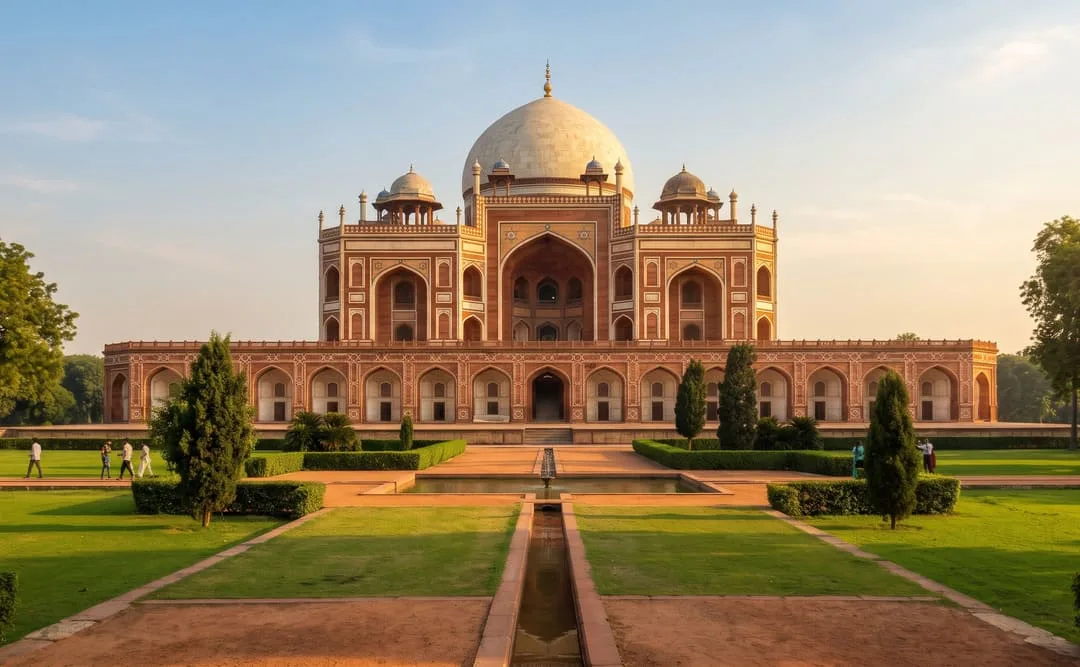
Humayun’s Tomb is one of Delhi’s most important historical monuments and a UNESCO World Heritage Site. Built during the Mughal period, the monument is known for its impressive red sandstone structure, white marble details and beautiful Charbagh gardens.
It is an excellent destination for visitors interested in Mughal history, architecture and photography.
- Location: Nizamuddin East, New Delhi.
- Best For: History, architecture and photography.
- Suggested Duration: 1–2 hours.
2. India Gate
India Gate is one of the most recognisable landmarks in the capital. This famous war memorial honours Indian soldiers who lost their lives during the First World War and the Third Anglo-Afghan War.
The surrounding lawns and ceremonial avenue make it a popular place for evening walks and sightseeing.
- Location: Kartavya Path, New Delhi.
- Best For: Evening sightseeing, photography and family outings.
- Suggested Duration: 45 minutes–1 hour.
3. Red Fort
The Red Fort, also known as Lal Qila, is one of India’s most important historical monuments. Built by Mughal Emperor Shah Jahan, it served as the royal residence of the Mughal rulers in Shahjahanabad.
Its massive red sandstone walls, historic gateways, palaces and museums make it an important destination for understanding Delhi’s Mughal heritage.
- Location: Old Delhi.
- Best For: History and Mughal architecture.
- Suggested Duration: 2–3 hours.
4. Qutub Minar
Qutub Minar is a famous historical tower located in Mehrauli, South Delhi. This UNESCO World Heritage Site is known for its Indo-Islamic architecture, detailed inscriptions and surrounding historical structures.
Visitors can also explore the Iron Pillar, Quwwat-ul-Islam Mosque and other monuments within the complex.
- Location: Mehrauli, South Delhi.
- Best For: History, heritage and architecture.
- Suggested Duration: 1–2 hours.
5. Lotus Temple
The Lotus Temple is a famous Bahá’í House of Worship recognised for its unique lotus-shaped architecture.
Unlike traditional temples, it welcomes people from different religious backgrounds to experience silence, prayer and reflection.
Its peaceful surroundings and distinctive architectural design make it one of the most interesting places to visit in South Delhi.
- Location: Bahapur, Kalkaji, New Delhi.
- Best For: Architecture, peaceful surroundings and sightseeing.
- Suggested Duration: 45 minutes–1 hour.
Famous Hindu Temple in Delhi
Delhi is home to several beautiful Hindu temples that represent different religious traditions, architectural styles and spiritual practices.
While Akshardham is one of the most prominent modern Hindu temple complexes in the city, visitors can explore several other religious destinations during their Delhi trip.
If you are interested in discovering more temples, consider these destinations.
1. Laxminarayan Temple (Birla Mandir)
A well-known Hindu temple dedicated to Lord Vishnu and Goddess Lakshmi, featuring beautiful architecture and peaceful surroundings.
2. ISKCON Temple Delhi
Dedicated to Lord Krishna and Radha, this temple is known for devotional activities, spiritual programmes and religious celebrations.
3. Hanuman Temple Connaught Place
A popular religious destination dedicated to Lord Hanuman, visited by devotees throughout the week.
4. Kalkaji Temple
An important Hindu pilgrimage destination dedicated to Goddess Kali, particularly popular during Navratri.
5. Chhatarpur Temple
A large temple complex dedicated to Goddess Katyayani, known for its extensive grounds and attractive marble architecture.
These temples offer different religious and cultural experiences, making Delhi an interesting destination for visitors exploring Hindu heritage.
Suggested One-Day Delhi Sightseeing Itinerary
If you are visiting Delhi for a day, you can combine Akshardham with other popular attractions. However, remember that Akshardham itself can take several hours to explore.
Here is a practical itinerary that gives you time to experience different parts of the capital.
| Time | Destination |
| 10:00 AM | Arrive at Akshardham |
| 10:00 AM–1:00 PM | Explore the mandir, exhibitions and gardens |
| 1:00 PM–2:00 PM | Lunch and rest |
| 2:00 PM–3:00 PM | Travel towards Humayun’s Tomb |
| 3:00 PM–4:30 PM | Explore Humayun’s Tomb |
| 5:00 PM–6:00 PM | Visit India Gate |
| Evening | Explore central Delhi |
This itinerary prioritises the temple and nearby central Delhi attractions. If you want to watch the water show, allow extra time and consider visiting the other monuments on a separate day.
Travel tip: Red Fort and Qutub Minar are in different parts of Delhi. Avoid trying to fit every major monument into one day, especially if you want to enjoy Akshardham’s complete experience.
Is Akshardham Temple Delhi Worth Visiting?
Yes, Akshardham is worth visiting if you are interested in Indian culture, traditional architecture, spirituality and unique sightseeing experiences.
There are several reasons why it stands out among Delhi’s tourist attractions.
Beautiful architecture: Its intricate carvings, pillars, sculptures and traditional temple design make it an impressive architectural destination.
Cultural exhibitions: The exhibitions introduce visitors to Indian traditions, values, history and knowledge through visual storytelling.
Spiritual atmosphere: The main mandir provides a peaceful environment for prayer, darshan and reflection.
Family-friendly experience: The different attractions offer something interesting for visitors of different age groups.
Evening water show: The multimedia fountain performance adds a memorable experience to the visit.
If you are exploring Delhi for the first time, Akshardham is one of the destinations worth including in your sightseeing plan.
Travel Tips for Visiting Akshardham Temple Delhi
To make your visit comfortable and enjoyable, keep these practical tips in mind:
- Check the opening schedule: The temple remains closed on Mondays, so plan your visit accordingly.
- Reach early: Arriving around 10 AM gives you more time to explore the complex.
- Carry minimal belongings: Avoid carrying mobile phones, cameras and unnecessary luggage.
- Wear comfortable clothing: Choose modest clothes that follow the temple’s dress guidelines.
- Keep enough time: Do not rush through the exhibitions, gardens and mandir.
- Watch the water show: If you enjoy cultural performances, consider staying for the evening show.
- Use the metro: Akshardham Metro Station is a convenient way to reach the temple.
- Check ticket availability: Exhibition and water show tickets are subject to availability and their respective schedules.
Explore More Places to Visit in India
India offers countless travel experiences, from historical monuments and ancient temples to beautiful beaches, hill stations and cultural destinations. Explore our complete guide to Places to Visit in India to discover more amazing destinations and plan your next trip.
Discover Places to Visit in North India
North India is famous for its historical monuments, spiritual destinations, royal forts and beautiful mountain landscapes. Explore our guide to Places to Visit in North India to discover popular destinations across Delhi, Rajasthan, Himachal Pradesh, Uttarakhand and other northern states.
Conclusion
Akshardham Temple Delhi is one of the most remarkable destinations in India’s capital, bringing together spirituality, traditional architecture, cultural exhibitions and beautifully maintained gardens.
From the impressive main mandir and detailed stone carvings to the cultural boat ride and Sahaj Anand Water Show, every part of the complex offers a different experience. It is an interesting destination for families, tourists, students and anyone who wants to understand more about India’s cultural and spiritual heritage.
If you are planning a trip to Delhi, consider adding Akshardham to your itinerary along with other famous attractions such as India Gate, Humayun’s Tomb, Red Fort and Qutub Minar.
Whether you are visiting for religious reasons or simply exploring the city’s architecture and culture, Akshardham offers an experience worth remembering.
FAQs
1. Where is Akshardham Temple located in Delhi?
Akshardham Temple is located on NH 24, Pramukh Swami Maharaj Marg, New Delhi, Delhi 110092. It is situated in eastern Delhi near the Yamuna River.
2. What are the Akshardham Temple Delhi timings?
The temple complex is generally open from Tuesday to Sunday. The first entry is at 10 AM, and the last entry is at 6:30 PM. Mandir darshan is available until 8 PM. The complex remains closed every Monday.
3. What is the Akshardham Temple ticket price?
Entry to the main temple complex and mandir is free. Exhibition tickets cost ₹260 for adults, ₹210 for senior citizens and ₹160 for children aged 4–11. The water show costs ₹110 for adults and ₹80 for children aged 4–11.
4. Which metro station is nearest to Akshardham Temple?
Akshardham Metro Station on the Blue Line is the nearest metro station. The temple is approximately 350 metres away, making it convenient to reach on foot.
5. Is Akshardham Temple closed on Monday?
Yes. Akshardham Temple remains closed every Monday. Visitors can plan their trip between Tuesday and Sunday.
6. Who built Akshardham Temple in Delhi?
Akshardham was developed by BAPS under the spiritual guidance of Pramukh Swami Maharaj. The complex was constructed with the contributions of thousands of artisans and volunteers.
7. When was Akshardham Temple inaugurated?
Swaminarayan Akshardham was inaugurated on 6 November 2005 in New Delhi.
8. Is photography allowed inside Akshardham Temple?
No. Photography and videography are not permitted inside the complex. Mobile phones, cameras and other restricted electronic devices must be deposited at the cloakroom if eligible.
9. How much time is required to visit Akshardham Temple?
Around 3–5 hours is a reasonable estimate for exploring the temple, exhibitions, gardens and water show. A shorter visit is possible if you only want mandir darshan.
10. Is Akshardham Temple free to visit?
Yes. Entry to the temple complex and main mandir is free. However, exhibitions and the Sahaj Anand Water Show require separate paid tickets.
11. What is special about Akshardham Temple?
Akshardham is famous for its traditional Hindu architecture, intricate stone carvings, cultural exhibitions, landscaped gardens and multimedia water show. It presents different aspects of Indian culture and spirituality in one complex.
12. Can tourists visit Akshardham Temple?
Yes. Akshardham welcomes visitors from India and other countries. Visitors should follow the temple’s security procedures, dress guidelines and entry regulations.