




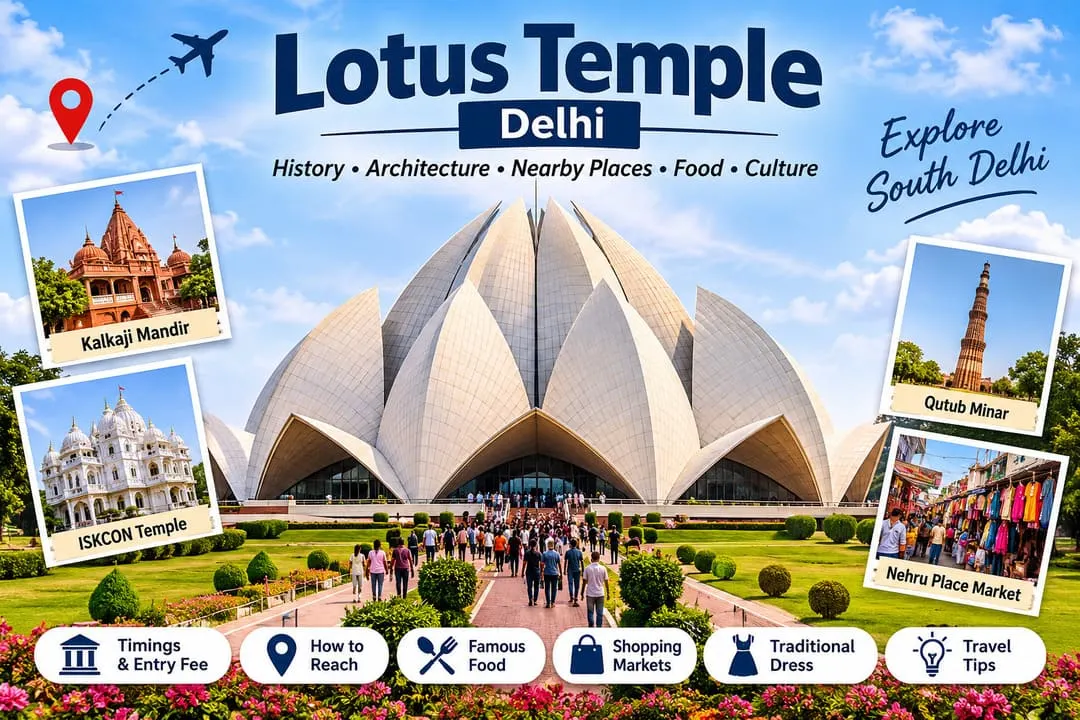
Delhi is home to many historical monuments, beautiful gardens, religious places and modern architectural landmarks. Among these attractions, the Lotus Temple Delhi holds a special place because of its unique lotus-shaped design, peaceful atmosphere and message of religious unity.
Located in South Delhi, the Lotus Temple is one of the most recognisable architectural landmarks in India’s capital. Unlike traditional temples filled with idols, paintings and elaborate decorations, this beautiful structure offers a simple and peaceful environment where visitors can sit quietly, pray or meditate.
The temple is also known as the Bahá’í House of Worship and welcomes people from different religions, cultures and backgrounds.
Whether you are a tourist exploring Delhi for the first time, an architecture enthusiast, a photographer or someone looking for a peaceful place away from the city’s busy streets, Lotus Temple is worth including in your travel itinerary.
In this detailed travel guide, you will learn everything about Lotus Temple Delhi, including its history, architecture, opening and closing timings, entry fee, nearest metro station, exact location, how to reach it and the best places to visit nearby.
Let’s explore one of Delhi’s most beautiful landmarks.
Table of Contents
| 1. Lotus Temple Delhi: Quick Information 2. Why Is Lotus Temple Delhi Famous? 3. Lotus Temple History 4. Lotus Temple Architecture 5. Lotus Temple Delhi Timing 6. Lotus Temple Entry Fee 7. Lotus Temple Location 8. Lotus Temple Nearest Metro Station 9. How to Reach Lotus Temple from Different Parts of Delhi? 10. Places to Visit Near Lotus Temple 11. Best Time to Visit Lotus Temple Delhi 12. Things to Know Before Visiting Lotus Temple 13. Suggested One-Day Delhi Sightseeing Itinerary 14. Nearby Places to Visit from Lotus Temple: Distance Guide 15. Lotus Temple Travel Tips for First-Time Visitors 16. Lotus Temple and Other Famous Tourist Attractions in Delhi 17. Explore More Places to Visit in North India 18. Frequently Asked Questions About Lotus Temple Delhi |
Lotus Temple Delhi: Quick Information
Before planning your visit, here are some important details about the Lotus Temple.
| Information | Details |
|---|---|
| Name | Lotus Temple |
| Also known as | Bahá’í House of Worship |
| Location | Bahapur, Kalkaji, South Delhi |
| City | New Delhi, India |
| Opening year | 1986 |
| Architect | Fariborz Sahba |
| Architectural style | Lotus-inspired modern architecture |
| Main structure | 27 marble-clad petals |
| Religion | Bahá’í Faith |
| Entry fee | Free |
| Weekly closing day | Monday |
| Nearest metro station | Kalkaji Mandir |
| Metro line | Violet Line |
| Best time to visit | October to March |
| Visit duration | Approximately 1–2 hours |
The Lotus Temple is a popular tourist destination because it combines architectural beauty with a peaceful atmosphere. You do not need to belong to any particular religion to enter the temple.
Why Is Lotus Temple Delhi Famous?
The Lotus Temple is famous for its extraordinary flower-shaped architecture and its message of unity among humanity.
Its design resembles a half-open lotus flower, which is an important symbol in Indian culture and is associated with purity, peace and spirituality.
However, its popularity is not limited to its appearance. There are several reasons why visitors from India and around the world come to see this beautiful landmark.
1. Unique Lotus-Shaped Architecture
The most noticeable feature is its white marble structure, designed to look like a blooming lotus flower. The building consists of 27 independent marble-clad petals arranged in a carefully planned pattern.
2. Open to People of All Religions
The Bahá’í Faith believes in the oneness of humanity and the unity of religions. Therefore, people from every religious background are welcome to visit and pray.
3. Peaceful Prayer Hall
The central prayer hall provides a quiet environment for reflection and meditation. Visitors are encouraged to maintain silence inside.
4. Beautiful Gardens and Water Pools
Nine surrounding water pools and landscaped gardens make the temple even more attractive. The reflection of the white structure in the water creates a beautiful view.
5. International Architectural Recognition
The Lotus Temple has received international attention for its distinctive design and engineering. It is considered one of the most remarkable modern religious buildings in India.
Lotus Temple History
The Lotus Temple history is closely connected with the development of the Bahá’í Faith in India and the idea of creating a place of worship that welcomes everyone.
The temple was designed to represent peace, equality and unity among people, regardless of their religious beliefs.
The project was developed under the Bahá’í community, which wanted to establish a House of Worship in New Delhi that would reflect the spiritual and cultural identity of India.
When Was Lotus Temple Built?
The Lotus Temple was completed in 1986 and officially dedicated in December of that year.
The project took several years of planning, design and construction. Its unusual architectural structure required detailed engineering to create the appearance of a large blooming lotus flower.
After its completion, the temple became one of the most important modern architectural attractions in Delhi.
Who Built Lotus Temple in Delhi?
The Lotus Temple was designed by Iranian-born Canadian architect Fariborz Sahba.
His design was inspired by the lotus flower, which has deep cultural and spiritual significance in India.
The construction involved architects, engineers, designers and skilled workers who helped transform the complicated architectural concept into a real structure.
Why Was the Lotus Flower Chosen?
The lotus flower is a powerful symbol in Indian culture and is associated with purity, beauty, peace and spiritual growth.
It is respected in several religious traditions, including Hinduism, Buddhism and Jainism.
Choosing the lotus as the central architectural inspiration helped create a building that represents India’s cultural diversity while expressing the Bahá’í principle of unity.
Lotus Temple and the Bahá’í Faith
The Lotus Temple is a Bahá’í House of Worship.
The Bahá’í Faith teaches the unity of God, religion and humanity. One of its central principles is that people from different religious backgrounds should live together with mutual respect.
This principle is reflected in the design and purpose of the temple.
Inside the prayer hall, visitors can sit quietly and reflect. Readings and prayers from different religious traditions may also be presented during devotional services.
Unlike many traditional religious places, there are no religious idols or images inside the main prayer hall.
Lotus Temple Architecture
The Lotus Temple architecture is one of the main reasons this landmark attracts millions of visitors and architecture lovers.
Designed by Fariborz Sahba, the building represents a beautiful combination of modern engineering and traditional Indian symbolism.
The entire structure is designed around the shape of a lotus flower, with large white petals opening towards the sky.
27 Marble-Clad Petals
One of the most interesting features of the Lotus Temple is its 27 independent petals.
These petals are arranged in groups of three, creating nine sides around the central prayer hall.
The white marble surface gives the structure its distinctive appearance and makes it look like a giant flower blooming in the middle of a green landscape.
Nine Reflecting Pools
The temple is surrounded by nine reflecting pools that enhance its overall appearance.
These pools represent the leaves surrounding the lotus flower and create beautiful reflections of the building.
Apart from their visual beauty, the pools are part of the building’s environmental and cooling design.
Central Prayer Hall
The central prayer hall is the heart of the Lotus Temple.
It provides visitors with a quiet space for prayer, meditation and reflection.
The hall is surrounded by nine entrances, allowing visitors to enter from different directions.
The interior follows a simple design philosophy. There are no elaborate religious decorations, idols or paintings that might suggest preference for one particular religion.
Use of White Marble
White marble is one of the most important materials used in the temple’s exterior.
The marble gives the building a clean, elegant appearance and helps highlight its lotus-inspired shape.
The contrast between the white structure, blue water pools and green gardens makes the temple particularly beautiful during daylight.
Nine-Sided Design
The Lotus Temple follows a nine-sided architectural layout.
The number nine has significance in the Bahá’í Faith and is associated with completeness and unity.
The nine entrances lead towards the central prayer hall, symbolically welcoming people from all directions.
Lotus Temple Delhi Timing
If you are planning a visit, checking the Lotus Temple Delhi timing is important because the temple remains closed one day every week.
According to the Delhi Tourism visitor information, the temple generally opens from Tuesday to Sunday and remains closed on Monday.
| Visitor information | Details |
|---|---|
| Opening days | Tuesday to Sunday |
| Weekly closing day | Monday |
| Opening time | 9:00 AM |
| Closing time | 5:30 PM |
| Entry | Free |
Source: Delhi Tourism. Seasonal schedules and visitor arrangements may change, so confirm the latest timings before travelling.
Lotus Temple Opening Time
The usual opening time is 9:00 AM.
Visiting earlier in the day can be a good option if you want to explore the gardens, enjoy the architecture and avoid some of the afternoon crowds.
Lotus Temple Closing Time
The Delhi Tourism listing gives 5:30 PM as the closing time.
Some travel references publish longer summer hours, so it is sensible to check the official visitor information before your trip, especially during seasonal schedule changes.
Is Lotus Temple Open on Monday?
No. The Lotus Temple generally remains closed on Mondays for maintenance.
Visitors should plan their trip between Tuesday and Sunday.
Best Time of Day to Visit Lotus Temple
Morning and late afternoon are good choices for visiting the Lotus Temple.
Morning visits offer a relatively comfortable sightseeing experience, while late afternoon light makes the white marble exterior and reflecting pools particularly attractive.
If photography is important to you, explore the gardens and exterior areas during daylight.
Lotus Temple Entry Fee
One of the best things about visiting the Lotus Temple is that it is free for everyone.
The Lotus Temple entry fee is ₹0. Visitors do not need to purchase an admission ticket to enter the temple.
| Category | Entry fee |
|---|---|
| Indian visitors | Free |
| Foreign visitors | Free |
| Children | Free |
| Senior citizens | Free |
There is no standard admission charge for visiting the Lotus Temple.
This makes it an excellent sightseeing option for families, students, international tourists and budget travellers exploring Delhi.
Is Photography Allowed Inside Lotus Temple?
Photography is generally not permitted inside the main prayer hall because visitors are expected to maintain silence and respect the peaceful environment.
Photography arrangements in the gardens and exterior areas may be subject to local rules and staff instructions.
Always follow the instructions displayed at the entrance.
Lotus Temple Location
If you are wondering where is Lotus Temple located, it is situated in Bahapur, Kalkaji, in the southern part of New Delhi, India.
The temple is close to Nehru Place, Kalkaji Mandir and East of Kailash, making it relatively easy to reach using public transport.
Lotus Temple address:
Lotus Temple Road, Bahapur, Kalkaji, New Delhi, Delhi 110019, India.
Where Is Lotus Temple Located in Delhi?
The Lotus Temple is located in South Delhi, near the Nehru Place commercial area.
Its location makes it convenient to combine a visit with other popular attractions such as ISKCON Temple, Kalkaji Mandir and nearby shopping destinations.
The temple is also well connected to the Delhi Metro network.
Lotus Temple Nearest Metro Station
The Lotus Temple Delhi nearest metro station is Kalkaji Mandir Metro Station.
It is one of the most convenient ways to reach the temple, especially if you are travelling from another part of Delhi.
Which Metro Line Goes to Lotus Temple?
Kalkaji Mandir Metro Station is an interchange station connecting two Delhi Metro lines:
- Violet Line
- Magenta Line
The station is approximately 500 metres from the Lotus Temple, although the exact walking distance depends on the exit and route you take.
| Metro information | Details |
|---|---|
| Nearest metro station | Kalkaji Mandir |
| Violet Line | Available |
| Magenta Line | Available |
| Approximate distance | 500 metres |
| Travel option | Walking or auto-rickshaw |
How to Reach Lotus Temple by Metro
You can reach Kalkaji Mandir Metro Station from different parts of Delhi using the following routes:
From New Delhi Railway Station
Take the Yellow Line towards HUDA City Centre (Millennium City Centre Gurugram) and change at Central Secretariat for the Violet Line. Travel towards Raja Nahar Singh and get off at Kalkaji Mandir.
From Rajiv Chowk (Connaught Place)
Take the Yellow Line towards Samaypur Badli, change at Central Secretariat and board the Violet Line towards Raja Nahar Singh. Exit at Kalkaji Mandir.
From IGI Airport
Take the Airport Express Line to New Delhi Metro Station, change to the Yellow Line and then change at Central Secretariat to the Violet Line. Get off at Kalkaji Mandir.
From Noida
Take the Magenta Line towards Janakpuri West and exit at Kalkaji Mandir.
How to Reach Lotus Temple by Road?
Visitors can also reach the temple using taxis, app-based cabs, auto-rickshaws and local buses.
If you are travelling by your own vehicle, enter Lotus Temple Road, Bahapur, Kalkaji, New Delhi, into your navigation app.
Parking arrangements and availability should be checked locally.
How to Reach Lotus Temple from Different Parts of Delhi?
Delhi has an extensive transport network, so reaching the Lotus Temple is relatively convenient.
Here are some common starting points:
| Starting point | Recommended transport |
|---|---|
| New Delhi Railway Station | Metro via Central Secretariat |
| Old Delhi Railway Station | Metro via Kashmere Gate |
| Hazrat Nizamuddin Railway Station | Taxi, auto or metro |
| IGI Airport | Airport Express + Yellow + Violet Line |
| Connaught Place | Yellow + Violet Line |
| Noida | Magenta Line |
| Gurgaon | Yellow Line + interchange |
Travel times depend on traffic, interchange waiting time and your exact starting point. Check live metro and road routes before departure.
Places to Visit Near Lotus Temple
One of the biggest advantages of visiting Lotus Temple is its location in South Delhi.
There are several famous religious places, historical monuments, shopping areas and green spaces nearby. You can easily combine your temple visit with other attractions to make your Delhi sightseeing trip more interesting.
Here are some of the best places to visit near Lotus Temple.
1. Kalkaji Mandir
Kalkaji Mandir is one of the well-known Hindu temples in South Delhi. Dedicated to Goddess Kali, this religious destination attracts devotees throughout the year.
The temple is particularly popular during Navratri, when large numbers of devotees visit to seek blessings.
Because it is located close to the Lotus Temple, you can include both destinations in the same sightseeing plan.
Why visit?
- Religious and cultural importance.
- Dedicated to Goddess Kali.
- Popular during Navratri celebrations.
- Convenient to combine with Lotus Temple.
2. ISKCON Temple Delhi
ISKCON Temple Delhi, also known as Sri Sri Radha Parthasarathi Mandir, is another popular spiritual attraction near the Lotus Temple.
Located in East of Kailash, the temple is dedicated to Lord Krishna and Radha.
Its beautiful architecture, devotional atmosphere and religious activities make it an interesting place for both devotees and tourists.
Visitors can explore the temple complex, learn about the teachings of the Bhagavad Gita and experience devotional activities.
Why visit?
- Beautiful temple architecture.
- Dedicated to Lord Krishna and Radha.
- Spiritual and cultural exhibitions.
- Peaceful devotional environment.
3. Nehru Place
Nehru Place is one of Delhi’s most recognised commercial and electronics markets.
It is especially popular among people looking for computers, laptops, electronic accessories, computer hardware and IT-related services.
The area also has restaurants, cafés and several commercial buildings.
If you are interested in shopping or exploring the modern commercial side of Delhi, Nehru Place is worth visiting.
Why visit?
- Popular electronics and computer market.
- Laptop and computer accessories.
- Restaurants and cafés.
- Easy access from Lotus Temple.
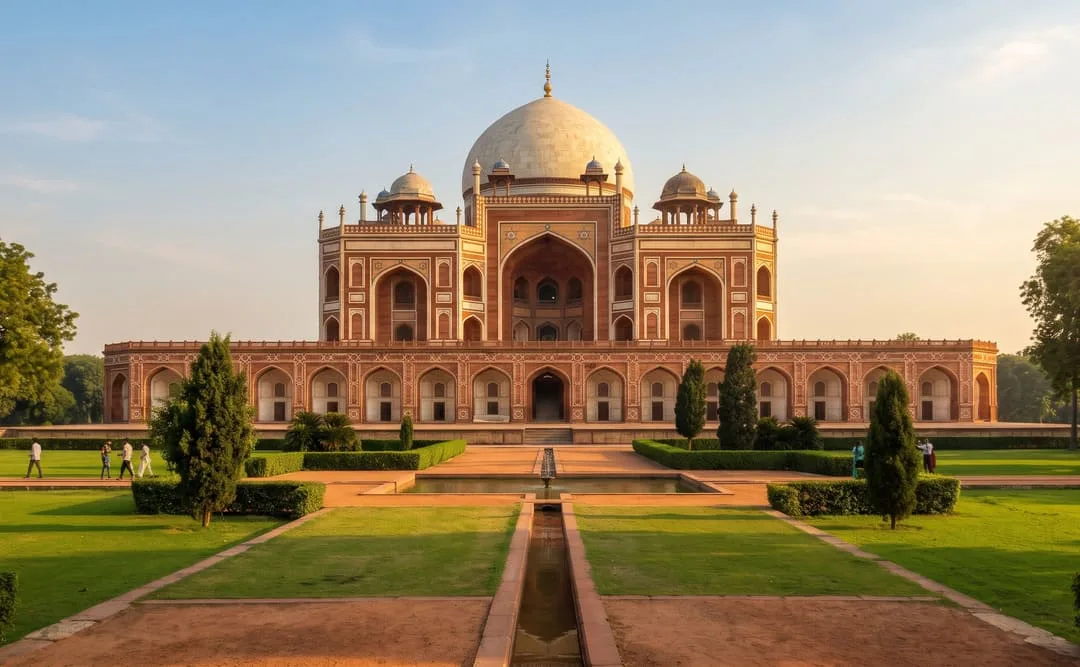
4. Humayun’s Tomb
Humayun’s Tomb is one of the most beautiful historical monuments in Delhi and a UNESCO World Heritage Site.
Built in the 16th century, the monument is an excellent example of Mughal architecture. Its large central dome, red sandstone structure, marble detailing and Persian-inspired gardens make it a major attraction for history lovers.
The monument is also historically important because its architectural style influenced later Mughal buildings, including the Taj Mahal.
If you enjoy exploring Delhi’s historical heritage, Humayun’s Tomb deserves a place in your itinerary.
Why visit?
- UNESCO World Heritage Site.
- Beautiful Mughal architecture.
- Historic gardens and pathways.
- Excellent photography opportunities.
Read our detailed guide: Humayun’s Tomb Delhi.
5. Qutub Minar
Qutub Minar is another important historical attraction in South Delhi.
This magnificent tower is famous for its Indo-Islamic architecture, detailed inscriptions and historical significance.
The Qutub Minar complex includes several historical structures, including the Iron Pillar and Quwwat-ul-Islam Mosque.
It is a UNESCO World Heritage Site and attracts visitors interested in India’s medieval history and architecture.
Why visit?
- UNESCO World Heritage Site.
- Historic Indo-Islamic architecture.
- Famous Iron Pillar.
- Important monuments within the complex.
Read our detailed guide: Qutub Minar Delhi.
6. India Gate
India Gate is one of the most famous landmarks in New Delhi.
This historic war memorial was built in honour of Indian soldiers who lost their lives during the First World War and other conflicts.
The surrounding lawns and open public spaces make it a popular destination for families, tourists and local visitors.
Evenings are particularly attractive because the monument is illuminated and the surrounding area becomes lively.
Why visit?
- Iconic national war memorial.
- Beautiful evening views.
- Open public gardens.
- Popular Delhi sightseeing destination.
Read our detailed guide: India Gate Delhi.
7. Aastha Kunj Park
Aastha Kunj Park is a green space near the Lotus Temple and ISKCON Temple.
It is a suitable place for people who want to enjoy greenery and take a break from busy sightseeing.
The park has open spaces and walking areas, making it an option for a relaxed outdoor visit.
Why visit?
- Green surroundings.
- Walking and relaxing.
- Convenient location near Lotus Temple.
- Suitable for a short outdoor break.
Best Time to Visit Lotus Temple Delhi
The best time to visit Lotus Temple is generally between October and March, when Delhi experiences comparatively pleasant weather.
During these months, temperatures are more comfortable for sightseeing, walking around the gardens and exploring other nearby attractions.
Seasonal Travel Guide
| Season | Months | Travel experience |
|---|---|---|
| Winter | October–March | Pleasant for sightseeing |
| Summer | April–June | Hot; prefer morning visits |
| Monsoon | July–September | Gardens look greener, but rain may affect outdoor plans |
Best Month to Visit Lotus Temple
November, December, February and March are generally good choices for a visit.
However, Delhi winters can sometimes bring fog and chilly mornings, so plan accordingly.
If you are travelling during summer, try to visit earlier in the day to avoid the afternoon heat.
Things to Know Before Visiting Lotus Temple
Before visiting the Lotus Temple, keep these practical points in mind:
- The temple generally remains closed on Mondays.
- Entry is free for all visitors.
- Maintain silence inside the prayer hall.
- Follow the photography restrictions and instructions given by temple staff.
- Wear comfortable footwear because you will need to walk around the complex.
- Follow the instructions regarding footwear and belongings at the entrance.
- Avoid littering and respect the gardens.
- Check the latest visiting hours before travelling.
- Allow approximately 1–2 hours for a comfortable visit.
- Respect the peaceful and inclusive atmosphere of the temple.
Suggested One-Day Delhi Sightseeing Itinerary
If you are planning a full day of sightseeing, you can combine the Lotus Temple with other popular attractions in Delhi.
Here is a suggested itinerary that covers spiritual places, historical monuments and famous landmarks.
| Time | Destination |
|---|---|
| 9:00 AM | Lotus Temple |
| 10:30 AM | Kalkaji Mandir |
| 11:30 AM | ISKCON Temple |
| 1:00 PM | Lunch near South Delhi |
| 2:30 PM | Humayun’s Tomb |
| 4:30 PM | India Gate |
| 6:00 PM | Explore the India Gate surroundings |
This is a suggested plan rather than a fixed schedule. Actual travel time will depend on traffic, queues and the opening hours of each attraction.
If you want to explore Qutub Minar as well, consider giving it a separate half-day rather than trying to fit every destination into one day.
Nearby Places to Visit from Lotus Temple: Distance Guide
Here is a quick reference table to help visitors plan their journey around South Delhi.
| Attraction | Approx. distance |
|---|---|
| Kalkaji Mandir | 0.5–1 km |
| Nehru Place | 1–2 km |
| Aastha Kunj Park | Around 1 km |
| ISKCON Temple | 2–3 km |
| Humayun’s Tomb | 7–9 km |
| Qutub Minar | 9–12 km |
| India Gate | 11–13 km |
Lotus Temple Travel Tips for First-Time Visitors
If you are visiting the Lotus Temple for the first time, a little preparation can make your experience more enjoyable.
Plan your visit on the right day: Since Monday is generally the weekly closing day, choose another day for your visit.
Prefer public transportation: Kalkaji Mandir Metro Station is conveniently located near the temple, making the metro a practical option.
Explore the complete complex: Do not rush directly to the prayer hall. Take time to explore the gardens, reflecting pools and exterior architecture.
Respect the prayer hall: The central hall is intended for prayer and meditation. Maintain silence and follow the instructions of the staff.
Combine nearby attractions: If you have enough time, visit ISKCON Temple and Kalkaji Mandir as part of the same South Delhi trip.
Check seasonal timings: Confirm the latest opening and closing hours before leaving your hotel or home.
Lotus Temple and Other Famous Tourist Attractions in Delhi
Delhi offers much more than the Lotus Temple. The capital city has a wonderful combination of historical monuments, religious landmarks, museums, gardens and modern attractions.
If you are planning a longer Delhi trip, consider exploring these destinations as well:
- Red Fort: A historic Mughal monument and UNESCO World Heritage Site.
- Qutub Minar: A famous medieval architectural landmark.
- Humayun’s Tomb: A beautiful Mughal-era garden tomb.
- India Gate: A prominent war memorial.
- Akshardham Temple: A large Hindu temple complex known for its detailed architecture.
- Jama Masjid: One of India’s most famous historic mosques.
- Lodhi Garden: A green public garden featuring historic tombs.
For a complete list of attractions, historical places, natural destinations and travel experiences, explore our main guide: Places to Visit in India
Explore More Places to Visit in North India
North India is full of fascinating travel destinations, from historical cities and ancient temples to beautiful mountains and natural landscapes.
If you are exploring Delhi, you can also plan trips to other popular North Indian destinations.
Some interesting destinations include:
- Agra: Famous for the Taj Mahal, Agra Fort and Mughal heritage.
- Jaipur: Known for its forts, palaces and colourful markets.
- Amritsar: Home to the famous Golden Temple and Jallianwala Bagh.
- Rishikesh: Popular for yoga, spirituality, river rafting and Himalayan scenery.
- Manali: A beautiful mountain destination known for snow-covered landscapes and adventure activities.
- Shimla: Famous for its colonial architecture, hills and pleasant surroundings.
Conclusion
The Lotus Temple is one of the most beautiful and peaceful attractions in New Delhi. Its remarkable lotus-shaped architecture, white marble petals, reflecting pools and welcoming atmosphere make it different from traditional religious buildings.
Whether you are interested in architecture, spirituality, photography or sightseeing, this landmark offers an enjoyable experience.
Its convenient location near Kalkaji Mandir and Nehru Place also makes it easy to combine your visit with other South Delhi attractions.
If you are exploring the capital for the first time, include Lotus Temple in your Delhi travel itinerary and take some time to appreciate its architecture and peaceful surroundings.
Delhi has many wonderful places waiting to be explored, and the Lotus Temple is certainly one of the landmarks worth experiencing.
FAQs
1. Where is Lotus Temple located?
Lotus Temple is located in Bahapur, Kalkaji, South Delhi, New Delhi, India. It is situated near Nehru Place and Kalkaji Mandir.
2. What is the Lotus Temple Delhi timing?
According to the Delhi Tourism listing, Lotus Temple generally opens from 9:00 AM to 5:30 PM, Tuesday to Sunday. It remains closed on Mondays. Check the latest seasonal schedule before visiting.
3. What is the Lotus Temple entry fee?
The Lotus Temple entry fee is completely free. There is no standard admission charge for Indian or foreign visitors.
4. Which is the nearest metro station to Lotus Temple Delhi?
Kalkaji Mandir Metro Station is the nearest metro station. It connects the Violet and Magenta Lines and is approximately 500 metres from the temple.
5. Who designed the Lotus Temple?
The Lotus Temple was designed by Iranian-born Canadian architect Fariborz Sahba.
6. When was Lotus Temple built?
The Lotus Temple was completed in 1986 and dedicated in December 1986.
7. Why is Lotus Temple famous?
The temple is famous for its lotus-shaped white marble architecture, nine reflecting pools, peaceful prayer hall and message of unity among religions.
8. How many petals are there in Lotus Temple?
The Lotus Temple has 27 independent marble-clad petals arranged in groups of three to form nine sides.
9. Is Lotus Temple open on Monday?
No. The Lotus Temple generally remains closed every Monday for maintenance and reopens on Tuesday.
10. Can people of all religions visit Lotus Temple?
Yes. People from all religions, cultures and backgrounds are welcome. The temple follows the Bahá’í principle of religious unity.
11. Is photography allowed inside Lotus Temple?
Photography is generally not allowed inside the main prayer hall. Follow the instructions provided by temple authorities regarding photography in other areas.
12. How much time is required to visit Lotus Temple?
Most visitors can comfortably explore the temple in approximately 1–2 hours, depending on crowd levels and the time spent in the gardens and prayer hall.
13. Which places can I visit near Lotus Temple?
Popular nearby attractions include Kalkaji Mandir, ISKCON Temple, Nehru Place and Aastha Kunj Park. You can also plan trips to Humayun’s Tomb, Qutub Minar and India Gate.
14. What is the best time to visit Lotus Temple?
October to March is generally considered a good period because Delhi’s weather is more comfortable for outdoor sightseeing.
15. Is Lotus Temple a Hindu temple?
No. Lotus Temple is a Bahá’í House of Worship. Its lotus-inspired design reflects Indian cultural symbolism, but it welcomes people from all religious backgrounds.