



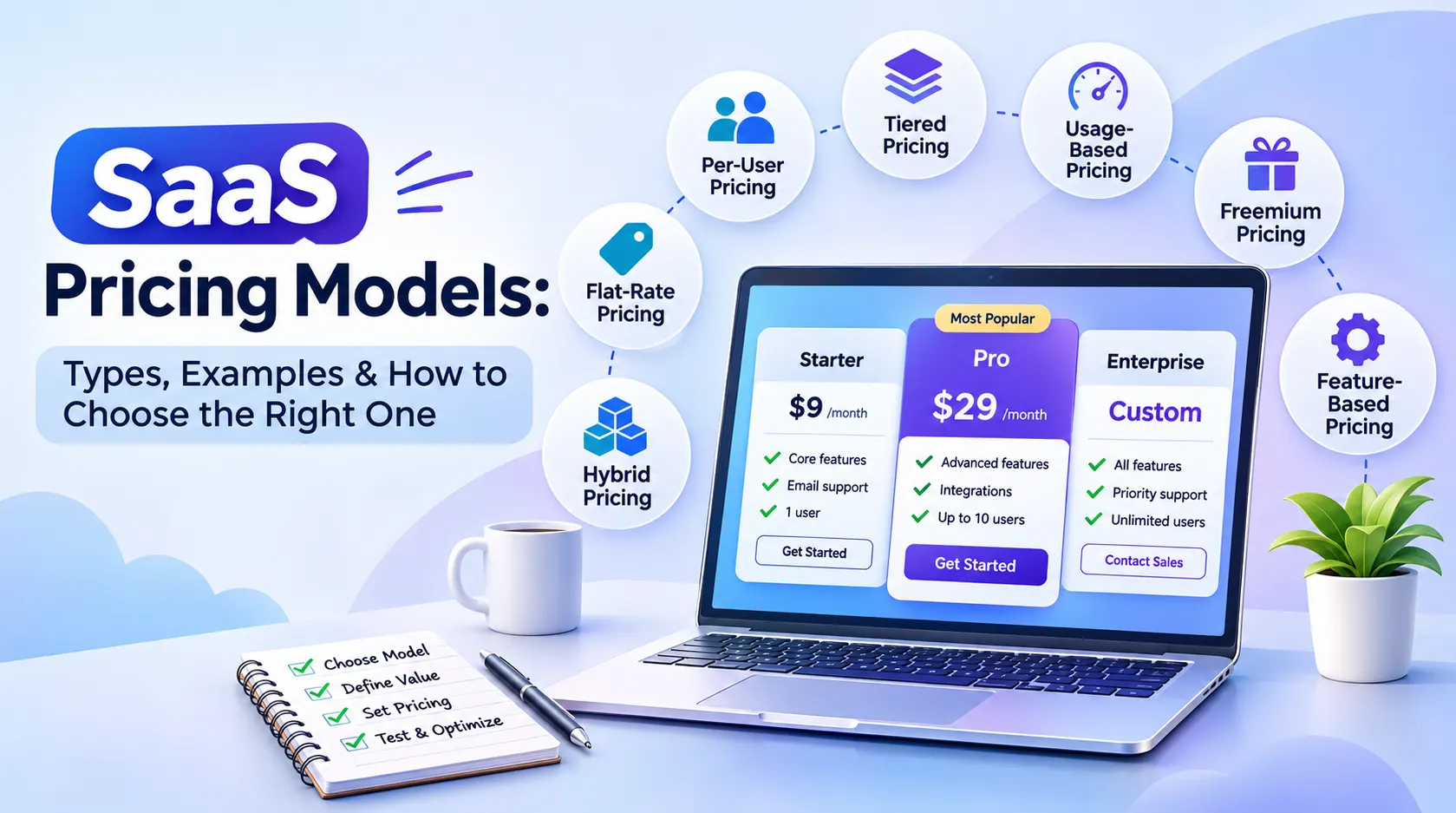
Choosing the right price for a software product is not just about deciding how much customers should pay. It is also about deciding what they pay for, how often they pay, and how the price changes as their needs grow.
This is where SaaS pricing models become important. A well-designed pricing structure makes it easier for customers to understand your product, select a suitable plan, and continue using it as their business expands.
Whether you are launching a new software product or improving an existing subscription business, understanding different pricing models can help you build a sustainable revenue strategy.
In this guide, we will explore seven common SaaS pricing models, their advantages and disadvantages, real-world examples, and how to choose the right approach for your business.
What Are SaaS Pricing Models?
SaaS pricing models are the methods software companies use to charge customers for accessing their cloud-based applications. Depending on the product, customers may pay a fixed subscription, purchase access for individual users, pay according to usage, or choose from different feature packages.
For example, a project management platform might charge per user, while an API service might charge according to the number of requests processed.
How SaaS pricing works
Most SaaS products offer monthly or annual subscriptions. Customers pay regularly to continue accessing the software, while the provider manages hosting, updates, and ongoing service delivery.
A pricing structure generally includes three important elements:
- Pricing metric: What customers pay for, such as users, storage, transactions, or usage.
- Payment method: How they pay, such as monthly subscriptions, annual subscriptions, or pay-as-you-go billing.
- Packaging: How features, usage limits, and services are grouped into different plans.
Understanding these elements helps businesses create pricing that reflects how customers actually use their software.
SaaS pricing model vs. pricing strategy
These terms are related, but they do not mean the same thing.
| SaaS pricing model | SaaS pricing strategy |
|---|---|
| Defines how customers are charged | Determines how the actual price is decided |
| Examples include tiered and usage-based pricing | Examples include value-based and competitor-based pricing |
| Focuses on billing structure | Focuses on pricing decisions and positioning |
For example, a company might use tiered pricing as its model and value-based pricing as its strategy. The first determines how customers select a plan, while the second helps determine what each plan should cost.
7 Common SaaS Pricing Models With Examples
Different software products create value in different ways. Therefore, one pricing structure cannot work equally well for every business.
Here are seven widely used SaaS pricing models and when they make sense.
1. Flat-Rate Pricing Model
Flat-rate pricing offers one product at a fixed price. Customers receive the same core features and pay the same amount regardless of how many people use the software or how frequently they access it.
Example: Basecamp is known for offering plans with fixed pricing rather than charging for every individual user.
Advantages:
- Easy for customers to understand.
- Simple billing and administration.
- Predictable subscription revenue.
- Reduces decision-making complexity.
Disadvantages:
- Larger customers may receive more value without paying more.
- Smaller customers may find the price expensive.
- Limited opportunities to increase revenue as usage grows.
Best for: Simple software products with similar customer requirements and relatively consistent usage.
2. Per-User or Seat-Based Pricing Model
In per-user pricing, customers pay according to the number of people who need access to the software. Each additional user or seat increases the subscription cost.
Example: Collaboration platforms such as Slack and project management tools such as Asana use seat-related pricing structures.
For instance, if a business purchases software at ₹500 per user per month for 10 employees, its monthly subscription would be ₹5,000 before applicable taxes or additional charges.
Advantages:
- Easy to calculate and understand.
- Revenue can grow as teams expand.
- Suitable for collaboration-based applications.
Disadvantages:
- Businesses may restrict access to control expenses.
- Shared accounts can become a problem.
- Revenue may not increase when customers receive more value without adding users.
Best for: CRM platforms, team collaboration software, HR applications, and project management tools.
3. Tiered Pricing Model
Tiered pricing provides multiple subscription plans at different price points. Each plan includes a different combination of features, usage limits, or support options.
A typical structure might look like this:
| Plan | Suitable for | Possible features |
|---|---|---|
| Starter | Individuals and beginners | Basic tools and limited storage |
| Professional | Growing businesses | Advanced features and automation |
| Enterprise | Large organizations | Custom controls, integrations, and dedicated support |
Example: HubSpot offers different product and subscription tiers for businesses with varying requirements.
Advantages:
- Serves different customer segments.
- Provides clear upgrade opportunities.
- Allows customers to select plans according to their budgets.
Disadvantages:
- Too many plans can confuse customers.
- Poorly designed feature limits can frustrate users.
- Customers may pay for features they rarely use.
Best for: SaaS businesses serving individuals, startups, growing companies, and enterprise customers.
4. Usage-Based Pricing Model
Usage-based pricing charges customers according to how much they consume. Instead of paying only for access, customers are billed according to measurable activity.
Common pricing metrics include:
- API requests
- Messages sent
- Transactions processed
- Data storage
- Computing resources
- AI credits or generated outputs
Example: Twilio charges according to communication usage, while cloud infrastructure services commonly charge for consumed resources.
Advantages:
- Customers pay according to consumption.
- Suitable for products with different usage levels.
- Revenue can grow as customer activity increases.
Disadvantages:
- Monthly bills can fluctuate.
- Customers may find budgeting difficult.
- Billing systems require accurate usage tracking.
Best for: API platforms, cloud infrastructure, payment services, communication tools, and AI applications.
5. Freemium Pricing Model
The freemium model provides a basic version of the software at no cost. Customers can use essential features for free and pay when they need additional capabilities, storage, or higher usage limits.
Example: Canva and Dropbox provide free entry-level experiences alongside paid plans.
Advantages:
- Makes it easier for new users to try the product.
- Reduces the initial purchasing barrier.
- Helps users understand the software before upgrading.
Disadvantages:
- Free users may never become paying customers.
- Supporting free accounts still creates operating costs.
- A generous free plan may reduce demand for paid features.
Best for: Software products that are easy to adopt, have a large potential user base, and offer clear reasons to upgrade.
6. Feature-Based Pricing Model
Feature-based pricing charges customers according to the capabilities or modules they want to access. Basic functionality may be included in an entry-level plan, while advanced features are available through higher plans or paid add-ons.
For example, a CRM platform might provide contact management in its basic plan but charge extra for advanced reporting, marketing automation, or sales forecasting.
Advantages:
- Customers can pay for capabilities they need.
- Creates opportunities to offer specialized features.
- Supports different customer requirements.
Disadvantages:
- Too many add-ons can make pricing confusing.
- Customers may feel essential features are unnecessarily restricted.
- Managing multiple feature combinations can become complicated.
Best for: Business software with clearly separated modules, such as CRM, accounting, marketing, and enterprise applications.
7. Hybrid Pricing Model
Hybrid pricing combines two or more pricing approaches. A company might charge a fixed monthly subscription along with additional fees based on users, transactions, storage, or consumption.
Example: A software platform might charge ₹2,000 per month for its basic service and an additional usage fee when customers exceed their included transaction allowance.
Hybrid pricing can also combine tiered subscriptions with per-user charges or usage-based AI credits.
Advantages:
- Balances predictable subscription income with usage-based revenue.
- Supports different customer segments.
- Allows pricing to grow as customers receive more value.
Disadvantages:
- More complicated to explain.
- Requires accurate billing and usage tracking.
- Unexpected additional charges can frustrate customers.
Best for: Growing B2B SaaS platforms, enterprise applications, cloud services, and software products with multiple value drivers.
SaaS Pricing Models Comparison
The following table makes it easier to compare the main options.
| Pricing model | How customers pay | Main advantage | Main limitation |
|---|---|---|---|
| Flat-rate | One fixed price | Simple billing | Limited expansion |
| Per-user | Per user or seat | Scales with team size | Can restrict adoption |
| Tiered | Different subscription plans | Serves multiple segments | Too many choices can confuse |
| Usage-based | According to consumption | Flexible billing | Less predictable costs |
| Freemium | Free basic access, paid upgrades | Easy product adoption | Free users may not convert |
| Feature-based | According to selected capabilities | Flexible functionality | Complex packaging |
| Hybrid | Combination of pricing methods | Multiple revenue opportunities | More complex billing |
There is no universally best SaaS pricing model. The right choice depends on how the product creates value, how customers use it, and how predictable the business needs its revenue to be.
SaaS Pricing Models for B2C, B2B, and Enterprise Businesses
Different customer groups have different purchasing requirements.
B2C SaaS pricing: Consumer-facing applications generally benefit from simple plans, transparent prices, and easy online payments. Freemium and affordable subscription models can work well when users want to try a product before purchasing.
B2B SaaS pricing: Business customers often need multiple user accounts, integrations, reporting, and team features. Tiered, per-user, and hybrid pricing can suit these requirements.
Enterprise SaaS pricing: Large organizations may need custom integrations, advanced security, dedicated support, and negotiated service agreements. Enterprise pricing often includes custom plans, annual contracts, and volume-based arrangements.
The important point is to understand the customer’s requirements before selecting a pricing structure.
How to Choose the Best SaaS Pricing Model for Your Business
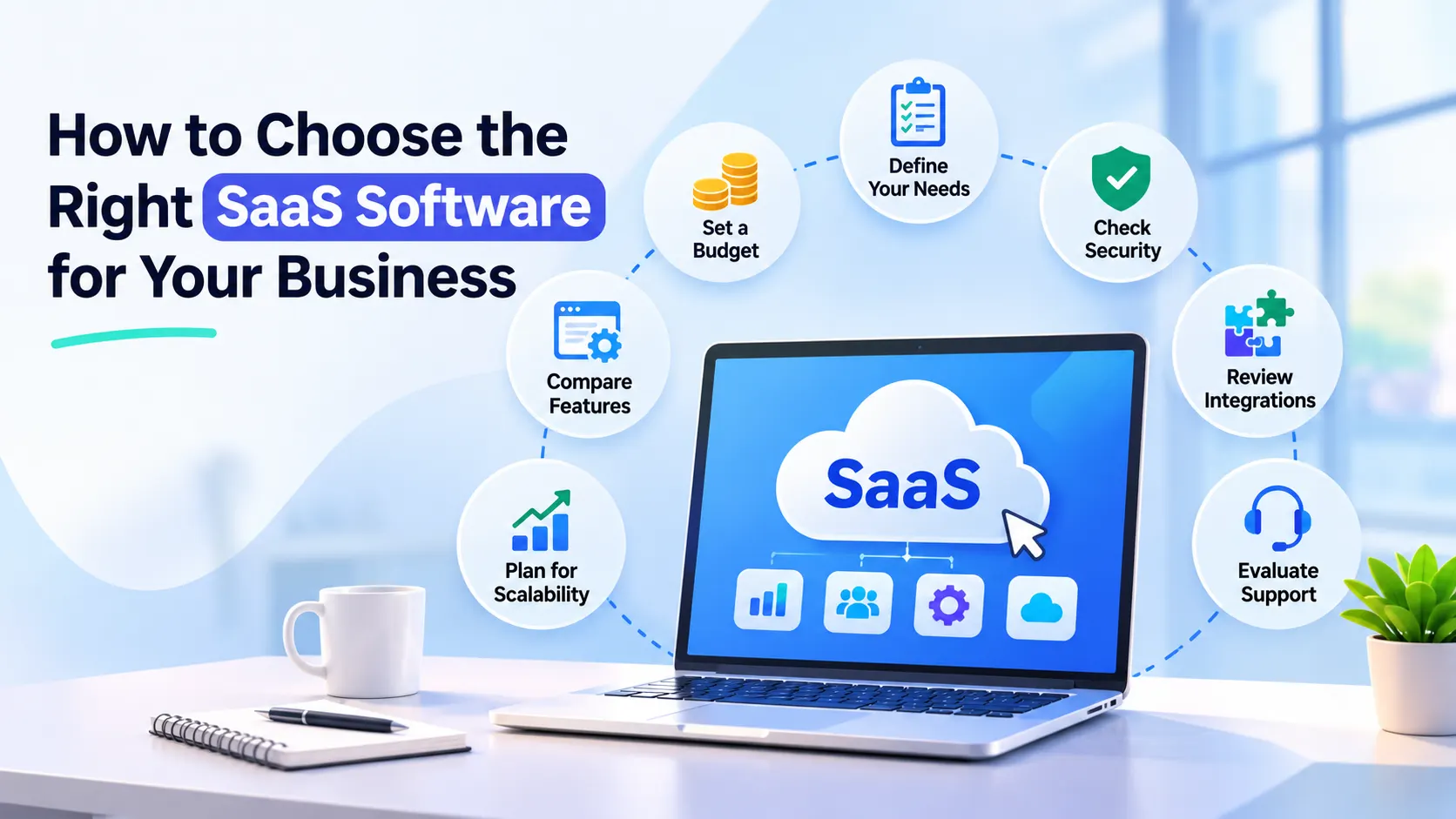
Choosing the right structure requires more than looking at competitors’ pricing pages. Consider these six steps before making a decision.
1. Understand Your Target Customers
Identify whether your customers are individuals, startups, small businesses, or large organizations.
Study their budgets, purchasing behaviour, and reasons for using your software. This will help you create plans that match their requirements.
2. Identify How Your Product Creates Value
Ask what customers actually gain from using your product.
Does it help them manage more employees, process additional transactions, save time, or automate repetitive tasks?
Your pricing metric should have a clear connection to the value customers receive.
3. Study Your Product’s Usage Patterns
Review how customers use the software.
If most customers use the same features at similar levels, flat-rate pricing may be suitable. If usage differs significantly, tiered or usage-based pricing may make more sense.
4. Evaluate Your Costs and Revenue Goals
Consider hosting, infrastructure, customer support, development, payment processing, and customer acquisition costs.
Your pricing should cover the cost of delivering the service while leaving room for sustainable growth.
5. Compare Competitors Without Copying Them
Study competing products to understand their plans, feature limits, billing methods, and target audiences.
However, copying a competitor’s price without understanding its customers and costs can lead to poor pricing decisions.
6. Test and Improve Your Pricing
Start with a pricing structure that customers can understand. Collect feedback, monitor usage, and evaluate customer behaviour.
Make changes when evidence suggests that customers are confused, important features are underpriced, or the current structure no longer reflects the value delivered.
Common SaaS Pricing Mistakes to Avoid
Even a useful software product can struggle if its pricing structure creates unnecessary barriers.
Avoid these common mistakes:
- Copying competitor prices: Their costs, customers, and business models may be different.
- Creating too many plans: Excessive choices can make purchasing difficult.
- Ignoring customer feedback: Customers can reveal whether plans and limits make sense.
- Using unclear billing terms: Explain included usage, extra charges, and renewal conditions.
- Offering an unsuitable free plan: Free access should provide value without making paid upgrades unnecessary.
- Ignoring changing costs: Infrastructure and support expenses may increase as usage grows.
- Never reviewing pricing: Customer needs and product capabilities can change over time.
How to Measure and Improve Your SaaS Pricing Strategy
After launching your pricing plans, monitor whether they are working for both customers and the business.
Useful metrics include:
- Monthly Recurring Revenue (MRR): Revenue generated from active monthly subscriptions.
- Annual Recurring Revenue (ARR): Annualized recurring subscription revenue.
- Average Revenue Per Account (ARPA): Average recurring revenue generated per customer account.
- Customer Churn Rate: Percentage of customers who cancel during a specific period.
- Customer Lifetime Value (CLV): Estimated revenue or value generated by a customer over the relationship.
- Plan Conversion Rate: Percentage of prospects or free users who become paying customers.
These metrics help identify whether pricing is attracting suitable customers, supporting upgrades, and contributing to sustainable revenue.
Review customer feedback alongside the numbers. A pricing plan may generate revenue but still create frustration if its limits or additional charges are difficult to understand.
Frequently Asked Questions
1. What is the most common SaaS pricing model?
Subscription and tiered pricing are widely used in SaaS. Per-user pricing is also common in business software. The most suitable option depends on the product and customer requirements.
2. Which SaaS pricing model is best for startups?
Startups often benefit from simple flat-rate or tiered pricing because these structures are easier to explain and manage. Freemium may also work when the product has a clear upgrade path and can support free users economically.
3. What is the difference between subscription and usage-based pricing?
Subscription pricing charges a recurring amount for access to software, usually monthly or annually. Usage-based pricing charges according to consumption, such as API requests, transactions, or storage.
4. How do you develop a SaaS pricing model?
Start by identifying your target customers, understanding the value your product delivers, selecting an appropriate pricing metric, reviewing costs, and testing different plans. Improve the structure using customer feedback and performance data.
5. Is monthly SaaS pricing a good model for schools?
Monthly pricing can suit schools that want flexible payments and manageable short-term commitments. However, annual or academic-year plans may be more convenient when software is used throughout the school year. The best option depends on school budgets, renewal schedules, and the product’s usage.
6. Can a SaaS business use multiple pricing models?
Yes. A SaaS company can combine subscription, per-user, tiered, and usage-based pricing. This is known as hybrid pricing. The structure should remain transparent so customers understand exactly what they are paying for.